Is it time to reconsider the impact agenda?

By Niamh K Shortt

In our latest paper published in Social Science and Medicine we critique the way ‘impact’ is measured within the UK’s Research Excellence Framework* (REF) and in doing so we propose an alternative measurement, one based on enlightenment and process rather than outcomes.

Water_drop_impact_on_a_water-surface
Source: commons.wikimedia.org/wiki/File:Water_drop_impact_on_a_water-surface.jpg


Continue reading Is it time to reconsider the impact agenda?

The impact of a motorway extension in Glasgow on road traffic accidents

Funded by the NIHR PHR Programme

A new study published by Dr Jon Olsen at CRESH and colleagues at CEDAR in the Journal of Epidemiology and Community Health evaluated the impact of the 5-mile M74 motorway extension on road accidents that resulted in a casualty. The study found that it had no impact on the already decreasing trend of road accidents in the area. Continue reading The impact of a motorway extension in Glasgow on road traffic accidents

Seeing e-cigarettes in shops may influence their use by teenagers

By Jamie Pearce

Adolescents who recall seeing e-cigarettes in shops are more likely to have tried them in the past and are more likely to intend to try them in the future, according to a study published in the open access journal BMC Public Health.

16004247125_95069f5207_z

Source: http://www.ecigclick.co.uk. Creative Commons License

Continue reading Seeing e-cigarettes in shops may influence their use by teenagers

Regions of Europe gaining migrants have lower death rates

By Helena Tunstall

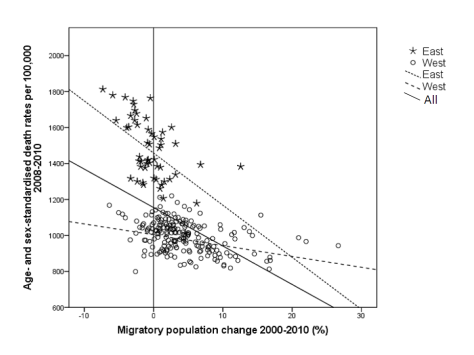
New research just published by CRESH in the European Journal of Public Health suggests there is a strong correlation between net migration, 2000-2010, and age- and sex- standardised death rates, 2008-2010 among the regions of Europe (Figure 1). The recent ‘migrant crisis’ in Europe has ensured that European political debate about migration, long centred on immigration, has continued to focus upon areas receiving migrants. This analysis suggests however that difficulties associated with immigration are the problems of advantage. Regions of Europe which experienced significant population growth through migration, were found mostly in Western countries with higher incomes and lower death rates. In contrast, Europe regions with net out-migration, predominantly located in the East, are burdened by the combined problems of low incomes, high death rates and population decline.

EJPH_scatterplot_blog
Figure 1 Death rates and migration among European regions


Continue reading Regions of Europe gaining migrants have lower death rates

Job available: research associate, looking at impacts of woodlands on health

The CRESH team have a new post available. We’re looking for a quantitative researcher to work with us, and our colleagues at OPENspace, on a project looking at the impact of woodland improvement on community health. You can read more about the project in our protocol paper.

The job will be based in Glasgow and has funding until the 31 March 2017. The closing date for applications is 27 March 2016.

Continue reading Job available: research associate, looking at impacts of woodlands on health

Income deprivation and ethnicity

By Helena Tunstall & Stephanie Prady

Do deprivation indices based on means-tested benefits underestimate poverty in neighbourhoods with large minority ethnic populations? 

BorninBradford1Research has just been published which assesses how well the Income Deprivation Affecting Children Index (IDACI) identifies neighbourhood poverty in areas of Bradford with different ethnic populations.

This study was a collaboration between researchers at the University of York, the Bradford Institute for Health Research and CRESH. It compared neighbourhood IDACI scores, based upon social security benefit claims, to socio-economic data collected from families in the Born in Bradford (BiB) cohort study.

This study concludes that income deprivation measures based on means-tested benefits may underestimate deprivation in neighbourhoods with large minority ethnic populations due to the low take-up of benefits among poor families in some ethnic groups.

Continue reading Income deprivation and ethnicity

Scotland’s poorest neighbourhoods have the most shops selling alcohol and tobacco

By Niamh K Shortt

New research published this week in BMC Public Health by the CRESH team, and colleagues in Global Public Health, has found that Scotland’s most deprived neighbourhoods have the highest availability of both tobacco and alcohol outlets.  The average density of tobacco outlets rises from 50 per 10,000 population in the least income deprived areas to 100 per 10,000 in the most deprived areas.  For alcohol outlets licensed to sell alcohol for consumption off the premises the figures were 25 per 10,000 in the least income deprived areas rising to 53 per 10,000 in the most income deprived areas.

CIgarettes and Alcohol. By CharlesFred, Flickr. Creative Commons Licence.
Source: CharlesFred, Flickr. Creative Commons Licence.

Continue reading Scotland’s poorest neighbourhoods have the most shops selling alcohol and tobacco

Financial distress and inequalities in wellbeing across 13 European countries

By Claire Niedzwiedz

Governments are increasingly recognising the wellbeing of their citizens as a policy priority.  But in times of economic difficulty the welfare ‘safety net’ is often reduced, which may adversely affect the wellbeing of those most threatened by financial insecurities. Focusing on social inequalities in wellbeing across different countries – as we do in our latest paper – is therefore crucial.

By alf.melin, Flickr. Creative Commons (CC BY-SA 2.0) Continue reading Financial distress and inequalities in wellbeing across 13 European countries

Scottish MSPs – why vote for a national register of alcohol premises?

By Niamh Shortt

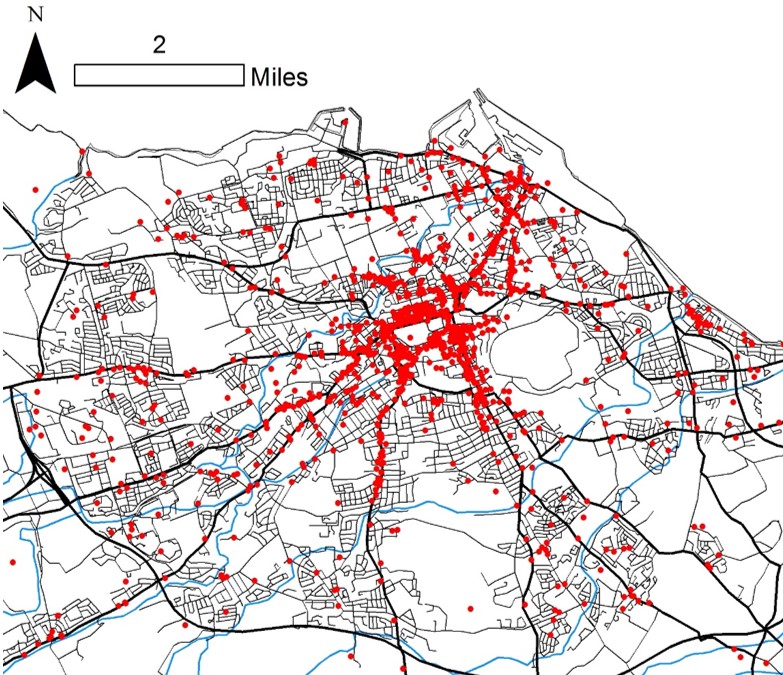
The Air Weapons and Licensing (Scotland) Bill stage 3 will be debated today in the Scottish Parliament. Amendments to the bill include a clause, proposed by Dr Richard Simpson (MSP Labour, Mid-Scotland and Fife), to establish a National Register of Alcohol Premise Licenses and Personal Licences.  CRESH support this amendment and called for such a register in evidence given by Niamh Shortt to the Local Government and Regeneration Committee.

edinburgh_outlets_map
Alcohol outlets (red dots) in Edinburgh. Base map data are © Crown Copyright and Database Right 25 June 2015. Ordnance Survey (Digimap Licence).

Continue reading Scottish MSPs – why vote for a national register of alcohol premises?

Insights into our ‘life course of place’ project. Part 1: constructing residential histories over seven decades

By Catherine Tisch

We’re investigating whether and how the neighbourhoods we live in throughout our lives might influence our health.  Our health and wellbeing may reflect an accumulation of influences from the different places we’ve lived during our lives as well as where we currently live.  Continue reading Insights into our ‘life course of place’ project. Part 1: constructing residential histories over seven decades

Neighbourhood availability of tobacco is likely to be a factor in explaining adult smoking in Scotland

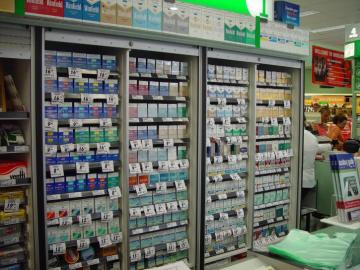
In our new paper published in Nicotine & Tobacco Research we find that adults in Scotland living in environments with a greater availability of tobacco outlets are more likely to smoke, and less likely to quit. This follows on from our earlier work, in which we found that teenagers in Scotland are more likely to smoke if they live in areas with the highest number of tobacco retailers.cigarette-counter-725x544 Continue reading Neighbourhood availability of tobacco is likely to be a factor in explaining adult smoking in Scotland

Empowering communities: An interactive tobacco and alcohol outlet density webmap for Scotland

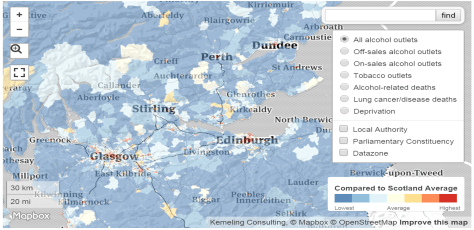
Today we are launching an interactive webmap that allows users to map tobacco and alcohol outlet density, and related health outcomes, for neighbourhoods (‘datazones‘) across Scotland.  The underlying data we have collected and assembled can also be freely downloaded for use.  Our research from Scotland shows that outlet density matters for health:

  • areas with the highest alcohol outlet density have double the death rate of those with the lowest densities (see our blog postreport and infographic)
  • adolescents living in areas with the highest tobacco outlet density are almost 50% more likely to smoke than those with the lowest (see our blog post, paper and infographic).

ALCOHOL OUTLET DATA UPDATED 25 JUNE 2015:  Previous to this date the alcohol outlet density data had used an alternate measure of density than outlets per km2, resulting in values that were typically 30-40% lower than the actual value.  Whilst the figures have changed the general picture has not: an area of high density remains an area of high density.  The rest of the data are unaffected.

webmap

Continue reading Empowering communities: An interactive tobacco and alcohol outlet density webmap for Scotland

Alcohol and Health in Scotland: Key Stats

As MSPs meet in the Scottish Parliament today to debate progress made against Scotland’s Alcohol Strategy, we’re launching a timely infographic to highlight the very real dangers of the oversupply of alcohol in our society, and the knock-on implications for health and inequality. Final Infographic

Continue reading Alcohol and Health in Scotland: Key Stats

How difficult life events influence risk of mental health problems and moves to deprived neighbourhoods

We’ve just published a journal article that assesses the links between difficult life events, residential moves and spatial inequalities in mental health in the UK.

Repossession2We find that people that move following difficult life events, such as relationship breakdown and eviction, have poor mental health and distinctive patterns of mobility.
Difficult life events appear to both harm mental health and residential opportunities, increasing the likelihood that people with poor mental health will live in socio-economically deprived neighbourhoods. Moves related to difficult life events could reinforce socioeconomic inequalities in health between areas by concentrating people with poor health in disadvantaged areas.

Continue reading How difficult life events influence risk of mental health problems and moves to deprived neighbourhoods

More reasons to think green space may be equigenic – a new study of 34 European nations

Today we published a paper which builds on our ideas about equigenic environments – places that can reduce health inequalities – and continues the investigation of associations between nature and health. This new study builds on a paper CRESH’s Rich Mitchell published a long time ago (2008) with Dr Frank Popham, suggesting that populations which have more green space in their neighbourhood tend also to have a smaller health gap between richer and poorer residents. Other people have found something similar (see this for example, or this). The idea that ‘equigenic’ environments might be able to disrupt the usual conversion of inequalities in wealth to inequalities in health has gained attention, partly because it seems so difficult to do anything about the health gap that almost inevitably follows a wealth gap, and partly because politicians and society seem unwilling to tackle the wealth gap itself. Continue reading More reasons to think green space may be equigenic – a new study of 34 European nations

Smoking and Health in Scotland: key stats

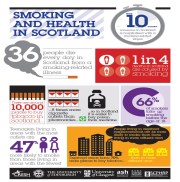
smoking_infographic2Today we’re launching our hot-off-the-press infographic about Smoking and Health in Scotland.  In collaboration with Action on Smoking and Health (ASH) Scotland we’ve created this summary of some of the key statistics on smoking and health in Scotland, featuring some headline results from our own research.  Please use and circulate widely! Continue reading Smoking and Health in Scotland: key stats

Job Opportunity: Administrative Assistant in CRESH

We’re looking for a full-time Administrative Assistant to help us with our research work for 5.5 months.  The postholder will assist in gathering, transcribing and inputting historic data from archives, as part of a project that is looking at how places influence our health across the course of our lives (part of the larger Mobility, Mood and Place project).  More information here.

Scottish (Managed) Sustainable Health Network (SMaSH) – Annual Event (2015)

This year SMaSH is holding its annual event jointly with us at CRESH. This free event is on the 26 March 2015 at the CoSLA Conference Centre, Verity House, Haymarket Yards, Edinburgh. The  programme is below for your information and if you would like to register to attend please follow the link below to the online registration page. Please disseminate the details to anyone you think may be interested. Continue reading Scottish (Managed) Sustainable Health Network (SMaSH) – Annual Event (2015)