Tobacco and Alcohol Outlet Density and Adolescent Behaviours

Image courtesy of mack2happy / FreeDigitalPhotos.net
Image courtesy of mack2happy / FreeDigitalPhotos.net 

Tobacco and alcohol use pose significant global public health challenges and are major determinants of preventable morbidity and mortality.  Preventing tobacco and alcohol misuse in adolescence before habits are formed is an important policy goal. Previous research into the relationship between tobacco outlet density and smoking prevalence has resulted in mixed findings. Whilst some have reported increased smoking prevalence with a higher density of retail outlets around the home and school others have reported no significant associations.  For alcohol a positive association between drinking and alcohol outlet density has been reported around the home for adults, adolescents and around Universities for college students. Despite this there have been several calls for a policy response to address the tobacco retail environment, primarily by ‘restricting the number of retailers around child spaces’. We received seed funding from the Scottish Collaboration for Public Health Research and Policy (SCPHRP) to examine the density of tobacco and alcohol retail outlets in Scotland and their association with the prevalence of drinking and smoking behaviours in school aged children. Continue reading Tobacco and Alcohol Outlet Density and Adolescent Behaviours

Green space, physical activity and health in New Zealand

A new piece of CRESH research has been published online in the journal Public Health this week.  The paper “The role of physical activity in the relationship between urban green space and health” can be downloaded here.  We looked at the health of over 8000 individuals who were interviewed for the New Zealand Health Survey in 2006 and 2007 and asked whether they were likely to be healthier if they lived in greener neighbourhoods.  We found that residents of greener neighbourhoods did indeed have better cardiovascular and mental health, independently of their individual risk factors (e.g., sex, age, socioeconomic status).  Green space might benefit health because it provides greater opportunities for physical activity, and we were able to test this hypothesis because the New Zealand Health Survey included information about how physically active each individual respondent typically was.  We found that although physical activity was higher in greener neighbourhoods it did not fully explain the green space and health relationship.  Therefore, other pathways between green space and health (e.g., social contacts, attention restoration) are likely to be equally/more important.

Author: Liz Richardson

Joint Seminar CRESH & PAHRC

Date: 12 noon – 1 pm, Tuesday 23 April 2013

Speaker: Esther Rind (CRESH)

Title: Industrial restructuring and physical activity

Venue: Physical Activity for Health Research Centre (PAHRC), Moray House School of Education, Room 2.35 (here), The University of Edinburgh, St Leonard’s Land, Holyrood Road, Edinburgh EH8 8AQ

Abstract: Industrial restructuring and physical activity in England –                             Towards a better understanding of geographical variations in physical activity

In recent decades, the prevalence of physical activity has declined considerably in many high-income countries which has been linked to rising levels of obesity and several weight-related medical conditions such as coronary heart disease, diabetes and cancer. This is in part related to the progressive development of obesogenic environments to which those at the lower end of the socio-economic strata are unequally more exposed than others. This presentation highlights the importance of a range of factors which contribute to a better understanding of observed geographical variations in levels of physical activity in adults. The research presented applied a mixed methods approach using GIS techniques, multilevel modelling and qualitative research interviewing. Results emphasise the plausible impact of inherited cultures and regional identities on health related behaviours as well as the importance of considering socio-cultural and historical dimensions for the development of physical activity interventions within communities with a particular industrial past.

Greenwash: have the benefits of green space been exaggerated?

IMG_0657

Greenwash” is sometimes used to describe exaggerated or otherwise misleading claims made about a product or company’s environmental benefits.  People are understandably becoming more and more cynical about environmental friendliness claims – but the danger is that genuine environmental benefits are rejected along with the greenwash, which “threatens the whole business rationale for becoming more environmentally friendly” (Futerra 2008). 

I am concerned that the green space and health research agenda is at risk of being overtaken by a form of greenwash, as ironic as that may sound.  Green spaces – also known as natural/vegetated/open spaces – clearly have some social, environmental and economic benefits.  The research of CRESH and many other groups has demonstrated this.  But these benefits are not experienced everywhere, or by everyone.  The same wooded park may be a valued jogging or walking area for some people, but a terrifying no-go area for others.  There is much important research to be done to understand and address the barriers that prevent different groups benefitting from green spaces.  CRESH researchers are among many jointly trying to bridge this knowledge gap.

The greenwash that concerns me is the mantra that ‘green space is good’ – end of story.  At a recent GreenHealth Conference (11th March 2013, Edinburgh) the fascinating results from a four-year Scottish Government funded research programme were presented.  CRESH’s own Rich Mitchell presented on the topic “More green = better health?” and concluded that this is not always the case (see blog post).  Nonetheless, in one of the afternoon discussions one attendee called for less research and more action “because we know green space is good already”.  Additionally, some important Greenspace Scotland work – showing that investment in ten community green space projects across Scotland provides good social, environmental and economic value for money – has been misleadingly reported elsewhere as “Greenspace is good… fact!”  This is greenwash.  It is also an example of a factoid – an assumption or speculation that is reported and repeated until it is considered true (see Cummins and Macintyre’s 2002 paper on how “food deserts” made it into UK policy by such a pathway).  Policy-making based on assumptions is dangerous: Cummins and Macintyre urge policy makers to look at the facts more critically.

Jane Jacobs – the influential American writer on urban planning – wrote about the greenwash surrounding green spaces (or ‘grass fetishes’ as she called it) more than 50 years ago.  In The Death and Life of Great American Cities (1961, Random House, NY) she wrote that “In orthodox city planning, neighbourhood open spaces are venerated in an amazingly uncritical fashion…” (p.90).  She qualifies that, while ”parks can and do add great attraction to neighbourhoods that people find attractive for a great variety of other uses”, they may also “exaggerate the dullness, the danger, the emptiness” (p.111).  If the barriers to green space use are not identified and addressed local people cannot be expected to use and benefit from them, regardless of the intentions of well-meaning city planners.  Informing people that ‘green space is good’ won’t help.  The danger is that when their touted benefits don’t materialise, green spaces may fall out of favour, when in truth, and with greater attention to what the evidence tells us, they may have been a great public health resource.  Instead of less research we urgently need to strengthen the evidence base and publicise our findings more widely.  Watch this space.

Author: Liz Richardson

CRESH involved in successful funding bid: ‘Mobility, Mood and Place’

Stadium Freeway in Portland, Is Shown in November, 1973, as It Looked without Street Lighting...11/1973
Jamie Pearce and Niamh Shortt, along with colleagues in the Edinburgh College of Art, the Centre for Cognitive Ageing and Cognitive Epidemiology, the Alzheimer Scotland Dementia Research Centre, School of Social and Political Science, Geriatric Medicine, Kings College London and Heriot Watt University have been successful in securing funding (£1.58 million) under the cross council Design for Wellbeing call led by the EPSRC along with the ESRC and the AHRC. The project, Mobility, Mood and Place, led by Professor Catherine Ward Thompson, will run for 3 years with Jamie and Niamh leading one of the four work packages. This work package will focus on a ‘lifecourse of place’, exploring how physical, built and social environments evolve over time and consider whether these processes are implicated in explaining inequalities in health-related mobility in older age. To get more of an idea of what we plan to do see Jamie’s recent blog post.

Is Japan really an exemplar of income equality? Comparing Japan with the UK

Since the development of the ‘income inequality hypothesis’, brought to broad attention by the publication of Richard Wilkinson and Kate Pickett’s book “The Spirit Level” (2009), Japan has commonly been held up as an exemplar of the benefits of low income inequality for health and social wellbeing. In contrast, the UK has been represented as an example of the high rates of social problems and poor population health that result from greater income inequality.

The ‘income inequality hypothesis’ has been the subject of intense scrutiny in academic journals for several decades and, following the public and political prominence of “The Spirit Level”, in the UK media and in reports from right of centre think tanks. Less well known in the UK, are the increasing concerns of some Japanese researchers that Japan is no longer the exemplar of income equality it is now often perceived to be.

The common self-perception among the Japanese of their country as an egalitarian ‘90 per cent middle-class society’ was first strongly challenged by Japanese economist Toshiaki Tachibanaki’s book “Confronting Income Inequality” published in Japan in 1998. Since then analysis by Japanese researchers has focussed attention on the problems of poverty in Japan. More recent data from different sources has produced markedly varied pictures of the degree of income inequality in Japan. Data presented in ‘”The Spirit Level” (2009) from the United Nations Development Programme Human Development Indicators suggests that Japan has the lowest levels of income inequality out of the group of the 21 rich countries compared. However, OECD figures published in 2011 have suggested that Japan has higher than average income inequality compared to other OECD countries.

The UK has relatively high levels of income inequality compared to other developed countries in recent data regardless of source.

A newly published paper, by Dimitris Ballas and colleagues Danny Dorling, Tomoki Nakaya, Kazumasa Hanaoka and Helena Tunstall, has analysed patterns of income inequality in Japan and the UK to try to establish a better picture of patterns and trends in income distribution within these two countries.

A key point about income microdata in Japan is that there is not much of it. Japan has just two surveys with suitable income data for calculating income inequality. The National Survey of Family Income and Expenditure (NSFIE) has been used by the World Bank in its income inequality figures. The other available survey, The Comprehensive Survey of Living Conditions (CSLC), was the data source for income figures in Tachibanaki (1998) and the more recent work of the OECD.

Differences between these surveys may be the first major factor underlying conflicting estimates of income inequality in Japan. It has been suggested that the CLSC may over-sample low income households while the proportion in NSFIE may be relatively small in comparison with other nationally representative data collected by the Statistics Bureau of Japan. We used the NSFIE as this was available over a longer period for years that were more suitable for comparison with available UK data.

The UK is fortunate to have a broad range of social surveys containing individual and household income data. We selected UK income data from the Family Resources Survey (FRS) and Households Below Average Income (HBAI) survey for use in our study.

We calculated two forms of inequality: mean and median income ratios. The median quintile ratio is the median income of the richest 20 per cent of the population divided by the median income of the poorest 20 per cent and is used in the analyses of HBAI data sets conducted by the Department for Work and Pensions in the UK. The mean quintile ratio is the mean income of the richest 20 per cent of the population divided by the mean income of the poorest 20 per cent and is the measure presented in “The Spirit Level”.

The results of our analysis of gross income find that in the three years for which we had comparative data, 1994, 1999 and 2004, the median quintile ratios in Japan were 3.85, 4.08 and 3.99 respectively, while in the UK the equivalent figures were 5.09, 5.23 and 4.99. The mean quintiles ratios in Japan were 4.56, 4.74 and 4.67 and in the UK were 6.65, 7.13 and 6.93 respectively.

So, in our data in all years both median and mean quintile ratios indicated significantly higher income inequality in UK than Japan. There was no clear time trend in income inequality in either country with ratios in both countries greatest in the mid time period 1999. The difference in degree of income inequality between Japan and UK was larger in the mean than median quintile ratios.

Understanding which measure of inequality has been used in international comparisons of income inequality is crucial as it is likely to be the second major source of discrepancy between estimates of income inequality in Japan from different sources. The reasons for this are indicated by analysis we completed of gross income distributions in Japan and UK across the full range of incomes. This found that compared to the UK, Japan actually has greater proportions of its population in the very lowest household income bands. This supports recent concern regarding poverty in Japan. However, we also found the proportions of the Japanese population in high income households, especially at the very highest levels of income are lower than those in UK. These results are consistent with previous research suggesting the share of total income held by the top groups is much lower in Japan than the UK and USA.

The relatively low levels of income among the highest income groups in Japan will have a greater impact on its mean than median top quintile figures and different implications again for figures based on the Gini coefficient. Recent international comparisons published by the OECD in 2011 suggesting relatively high levels of income inequality in Japan, unlike our study, used income data from CSLC and the Gini coefficient to measure income inequality. The Gini coefficient is likely to be less sensitive to the unusual income patterns among the highest income groups in Japan than either the mean or median income quintile ratios, which are both based on comparisons of the highest and lowest income quintiles only.

The limitations of available income data mean that disagreements about the measurement of income inequality are likely to continue to contribute to controversy regarding inequality in Japan, UK and beyond. But, this analysis provides further evidence that Japan is an exemplar of a particular type of income distribution, it is a country with considerable poverty but in which higher incomes have been checked to an unusual degree. These results reaffirm the significance of Japan to debates about the income inequality hypothesis and emphasise the importance of assessing the potential social harms resulting from very high incomes.

Author Helena Tunstall


Greener urban areas in Scotland are not healthier

Studies from around the world have looked for links between how much green space a neighbourhood has and the health of the resident population. We expect to find this link because evidence from experimental studies in the laboratory and field suggests that being in natural environments may reduce stress, enable recovery from fatigue, lower blood pressure and promote healing. Green spaces may also encourage physical activity, and social contact. However, not all studies find a link between green space and health; the relationship seems to vary by country, gender, socio-economic position and, importantly, by the measure of health used.

Until recently there had been very little work looking at the relationships between green space and health in Scotland specifically. On March 11th, results of the GreenHealth programme are being launched at a conference in Edinburgh. CRESH was part of GreenHealth, together with colleagues from several other institutions in Scotland including The James Hutton Institute and our friends at the OPENspace Research Centre. In this blog I am going to tell you about some of the results from our part of the work.

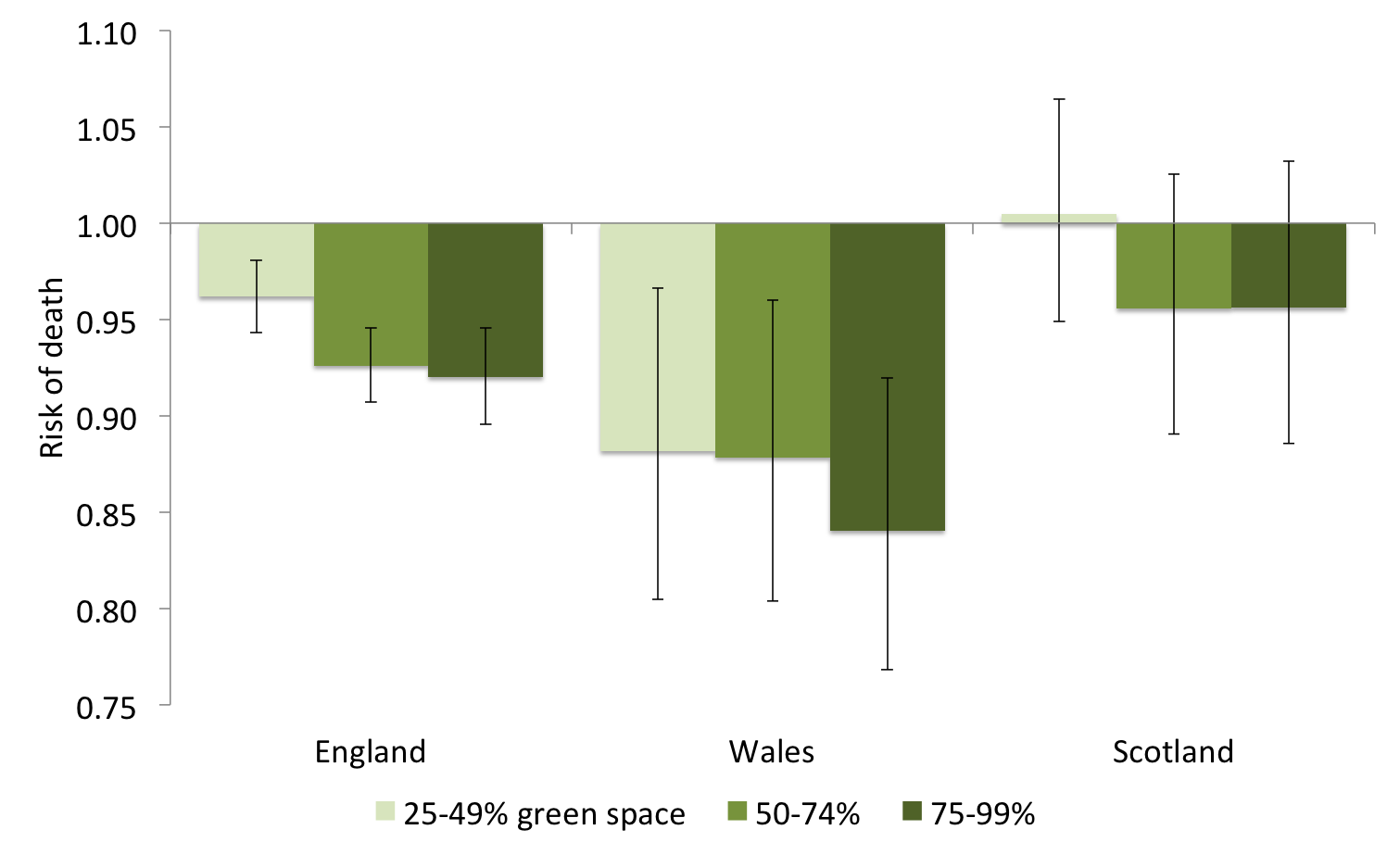
A key part of our work was to look at the link between how much green space a neighbourhood has, and its rates of mortality and morbidity. The graph below is typical of the results we found.
result1

The graph shows the relationship between the amount of green space in urban neighbourhoods in Scotland, and the risk of mortality for working age men. The risk is shown relative to urban areas with the least amount of green space, and the further a bar extends below the horizontal axis, the lower the risk in that type of area. The risk of death excludes that from external causes such as traffic accidents or suicide. The graph shows that in England and Wales, the risk of mortality falls as the amount of green space in an urban neighbourhood increases but in Scotland, there’s no significant relationship.

We spent a long time looking at whether these relationships were different for men and women, for older, working and younger age people, for more and less urban areas, for richer and poorer groups, for deaths from cardiovascular and respiratory disease, for measures of self-reported illness, and for different definitions of green space and neighbourhood. We only found a significant, protective relationship between mortality and green space for working age men living in the poorest two income-deprivation quartiles. Among these working-age men, those resident in the greenest urban areas were about 16% less likely to die than those resident in the least green urban areas.

On the whole though, we found very little evidence supporting the idea that urban neighbourhoods with more green space also have lower rates of mortality and morbidity.

The absence of effects for women echoes findings in England and Wales, and is likely linked to gender differences in the frequency and type of green space use. Women are known to use green spaces less often than men. We have written about this in the past and you can read our paper about it here.

So – why don’t we see a strong link between how much green space there is in a neighbourhood in Scotland, and how healthy it is? It seems very unlikely that the beneficial  biological and psychological processes which being in green space seem to trigger, just don’t happen to Scottish people. We may be different up here, but we’re not a different species…

We checked to see if our methods, or the data sets used might explain it, but we got the same results whichever data or method we tried. We could not allow for differences in the quality or types of urban green space within Scotland, and between England, Wales and Scotland, and it is possible that this is partly responsible; perhaps urban green spaces in Scotland are smaller, or less conducive to use. Perhaps the weather is so awful up here, that people just don’t want to go outside (though, it has been known to rain in Wales too…). We also wondered whether the so-called Glasgow effect was responsible, but we got the same pattern of results when we excluded Glasgow from the analysis.

Our best bet is that the Scottish population has a higher level of underlying poor health and risky behaviours such as smoking and drinking. The impact of green space on risk of mortality is, even in England, relatively weak. Any benefits of green space in urban Scotland may just be swamped by other things that damage health.

It’s not all bad news though. Whilst greener neighbourhoods might not be healthier in urban Scotland, the people who actually visit and use green spaces, whether for exercise, or just to get away from it all for a while, do seem to have better mental health and more life satisfaction, all else being equal We have published some of those results already and blogged about them too. We have more evidence that folk who do use green spaces reap health and wellbeing benefits, and will be blogging more about it once those studies are published.

In the meantime, the message is that park down the road will probably do you an awful lot more good if you actually visit it…


Can we develop a ‘life course’ of place to understand spatial inequalities in health?

There has been a great deal of recent interest amongst social scientists and public health researchers on the multitude of social, economic and cultural factors that operate across the life course to affect our health.  Life course perspectives have helped us to appreciate that socioeconomic status and health in older age are not independent of social and economic inequalities earlier in life.  Two related pathways are possible. First, social and economic factors accumulate over our lives and this accrual is associated with health later in life. Second, negative socioeconomic exposures early in life influence our social trajectory, in turn affecting health; in other words the playing field in early life is uneven and this helps to establish subsequent health inequalities.

Given that life course perspectives have been so useful it is perhaps surprising that those of us with interests in ‘place’ or the ‘environment’ and health have rarely taken a life course perspective. Place-based factors early in life as well as cumulative exposure to the environment over the life course may well be important for subsequent health. Yet this assertion has rarely been tested despite the possibilities that these approaches offer for enhancing our understanding of health-environment relations. Longitudinal studies of health and the environment have almost exclusively focused on area-level social disadvantage (e.g. using historical census data) and the cumulative effects on health of living in a low income area.

Of course many aspects of the environment have been implicated in explaining health outcomes so why is it that there have been so few studies examining the health implications of a broad set of environmental characteristics over the life course? The likely answer to this question is that we have been put off by the difficultly of the task!  It is rare that neighbourhood-level historical information for multiple points in time (e.g. green spaces, local infrastructure, housing quality etc.) is readily available. Even when geographical information is obtainable it is often in an inconvenient form (e.g. a paper map or buried in an archive) or incompatible with social and health information on individuals over the life courses.

Current work at CRESH is exploring the feasibility of developing a ‘life course of places’. We are examining whether we can develop a heuristic for measuring a range of ‘health-related’ neighbourhood measures across the Lothian region of Scotland at various time points over the past 80 years.  We are considering the suitability of a range of available data sources including past censuses, historical maps, aerial photography and historical land use information. Of course the environmental characteristics will have a plausible link to health and may include local green space, population and housing density, street connectivity, local destinations, air pollution, availability of services, public space and transport links.  We are developing the measures with a view to combining the data with cohort information relating to individuals born in the Lothian region.

If we are successful in our work, then this study promises to provide some new perspectives on understanding the role of place in explaining health outcomes in later life. Watch this space to follow our progress….

 Jamie Pearce, February 2013

Improving the evidence for place effects on (children’s) health

Four members of the CRESH team attended a two-day ‘Good Places, Better Health for Scotland’s Children’ conference (November 27th and 28th 2012, at Murrayfield, Edinburgh; @gpbhscotland and #gpbhconf).  Good Places Better Health (GPBH) is the Scottish Government’s strategy on health and the environment.  The conference reported on the first phase (2008-2011), which addressed how places can help to deliver improvements in four key health challenges facing children under 9 years old in Scotland: obesity, asthma, unintentional injury, mental health and wellbeing.  In 2012 the GPBH team published the recommendations that have arisen from the work programme.

The conference started by outlining how health and place ‘intelligence’ had been brought together to inform the recommendations.  The first step involved developing a conceptual model within which each of the issues and their influences could be framed (see Scottish Government report for more info).  Subsequently, evidence for place effects on health and wellbeing was brought together from scientific literature and workshops with scientific experts, practitioners, and communities.  The need to value and learn from the ‘anecdotes’ from the workshops as well as the ‘hard science’ from the literature reviews was stressed.  When reviewing the evidence gathered the GPBH team noted that (a) the absence of evidence did not equate with absence of possible effect, and that (b) the social, economic, cultural and physical components of places influence our health in complex and intertwined ways that are very difficult to disentangle.

Interestingly, and importantly, the evidence from literature, experts and practitioners varied.  In the case of childhood obesity, experts rated the strongest scientific evidence for the influence of place as being for ‘downstream’ influences on diet (portion size, snacking, fast food and soft drinks), and determinants of sedentary behaviour and of physical activity in schools and nurseries.  But practitioners (e.g., health care, police, and councils) ranked neighbourhood attributes most highly: unattractive, unsightly and unsafe neighbourhoods were 1st, and neighbourhoods without accessible play and sports facilities were 2nd.

Community engagement approaches were used to assess how communities saw and experienced things – as ‘on-the-ground’ experts.  When asked how place impacted upon their children’s health, parents and carers concurred with the practitioners.  They highlighted mainly negative neighbourhood attributes: anti-social behaviour, dog fouling, junkies, drug dealers, hooligans, drug paraphernalia, vandalism, and the lack of appropriate neighbourhood facilities.  There was a strong sense from these meetings that what researchers often label ‘low-level incivilities’ – things like dog mess, litter and graffiti – can cause a very high level of distress and potential health detriment.  These personal insights should inform and direct our investigations of neighbourhood influences on health.

When bringing the evidence together the team noted that the evidence was mainly for downstream determinants of health, such as displaying sweets at shop tills, and that the much-needed evidence for upstream drivers (the economic, social and political driving forces) would remain elusive until we were ‘permitted’ to randomise society and conduct controlled experiments!  Fortunately for all concerned this is unlikely to happen.  But the difficulties involved in evidencing the impacts of these wider determinants are clear.

What will help are neat approaches to working with pre-existing data that have been collected for individuals or populations over time – e.g., longitudinal survey datasets such as the British Household Panel Survey, repeated cross-sectional surveys such as the Scottish Health Survey, or national death records.  These provide us with a cost-effective means of assessing how wider changes to the upstream drivers of health might influence our health and health behaviours, by exploiting what are often referred to as ‘natural experiments’.  Here we can assess how health or behaviour changed either side of a particular ‘event’ (e.g., introduction of a policy to create smoke-free public buildings: see Jamie Pearce’s work in New Zealand) without needing to establish costly monitoring programmes that might not last long enough to show any effect.  Evidence from natural experiments can be even more robust if, in addition to ‘before and after’ data, we can also identify ‘treatment and control’ sites.  In the UK we have the opportunity of survey data that include both treatment and control nations: for example smoking was banned in public places in Scotland one year before it was in England, Wales or Northern Ireland.

If we remain fixated on the idea that ‘randomised controlled trials’ are the only evidence that counts (see Rich Mitchell’s blog post for discussion) we risk seeing public health policies being made on little or no research evidence (see Dunn and Bobak).  Alternatively, accepting the value of what we can learn from natural experiments and other longitudinal study designs will enable us to provide policy-makers with evidence for how upstream drivers influence our health.   The wealth of already-collected data available in the UK and elsewhere gives us a great opportunity to ‘add value’ to these investments and uncover important lessons about environment and health relationships.  We should continue to utilise these data, improve our use of them, and support the continuation of their collection.

Author: Elizabeth Richardson

What if neighbouring areas are very different?

Waldo Tobler’s first law of geography is that “everything is related to everything else, but near things are more related than distant things.” This is an important idea for many aspects of spatial science, but it’s taken particularly seriously by people who draw maps and do statistics to investigate how and why disease rates vary from place to place.

If Tobler’s first law holds,  we should expect the characteristics of people and places who are close together (including their health) to be similar. So, in general, the folk who live in your neighbourhood should be more like you than the folk who live on the other side of town.

This matters when we are researching if and how environment affects health. We know that people’s health can be affected by a huge range of things. If we are to reveal the health impacts that environment has, we need to try and allow for as many of those other influences as possible. However, we know that it’s very hard to account for all of them. This means some of the relationship between environment and health we see in our analyses may actually be due to these ‘unmeasured’ influences, a problem we call ‘residual confounding’. Now, if Tobler’s law is right, it is also likely that these unmeasured influences are also more similar when they are closer together. When this happens, it’s called residual spatial confounding. If we don’t allow for it, we run the risk of making mistakes in assessing the strength of relationships between the characteristics of environments and the health of the people who live there.

The good news is that these problems have long been known about and there are a range of techniques to try and deal with them. They include ways to statistically ‘smooth’ maps showing how risk of a disease varies from area to area, and to adjust measurements of risk for how close together they are in geographic space.

The bad news is that Tobler’s first law is not always true! It’s not always the case that neighbouring areas do have similar characteristics or environments. Often areas that are right next to each other contain very different types of people and have a very different environment. You have probably experienced this when walking around a town or city. You cross a road, the housing changes dramatically, and the streets ‘feel’ different. Those statistical techniques assume that kind of sudden change doesn’t happen.

Dr Duncan Lee and Prof Rich Mitchell have just finished an ESRC funded research project (RES-000-22-4256) trying to improve the way we handle this situation in our research. We have successfully created, and published techniques that can spot when two neighbourhood areas are so different that we need to alter our statistical assessment of the relationships between health and environment. One technique, published in Biostatistics, can be used when we have data that tell us something about the characteristics of the people or the neighbourhoods, such as house prices or smoking rates. The other can be used when all we have is information about health in the areas (now in press with Journal of the Royal Statistical Society Series C) .

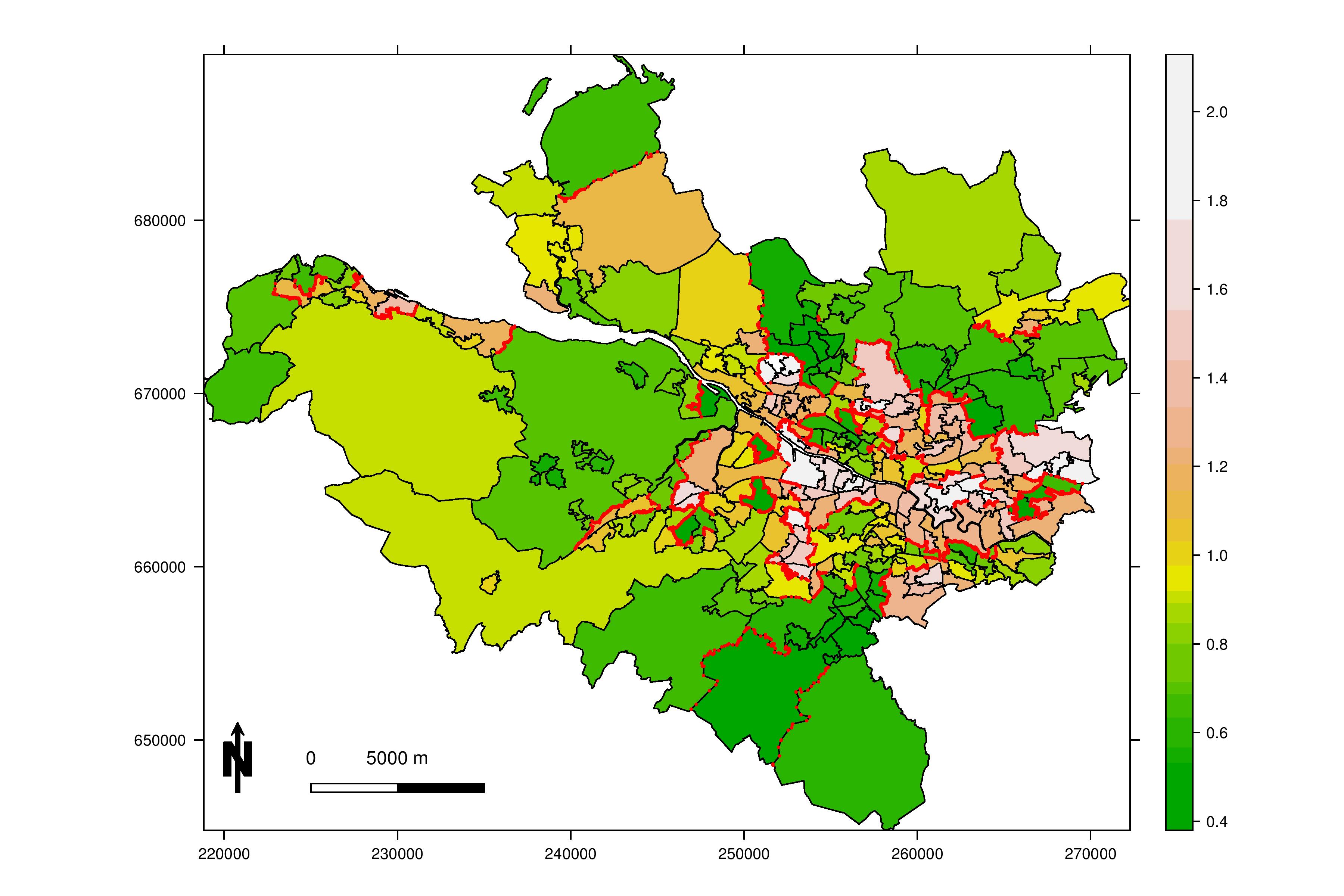
Here’s an example of our results. The map below (click it to view full size) shows 271 areas that make up the Greater Glasgow and Clyde Health Board (for the geeks, the areas are intermediate geography zones). We obtained data on the risk of admission to hospital with a primary diagnosis of respiratory disease, from the Scottish Neighbourhood Statistics database (http://www.sns.gov.uk/). The map is shaded so the colour of each area denotes its disease risk, with a value of 1.0 representing an average risk across the whole health board. Values above 1.0 represent high risk areas (for example a value of 1.10 indicates a 10% higher risk), while values below 1.0 represent low risk areas (for example a value of 0.85 indicates a 15% reduced risk). The red lines show boundaries between neighbouring areas that contain populations at very different risk of hospital admission for respiratory disease. These are the areas in which the conventional techniques would make mistakes. There are 173 of them… that’s 25% of all the boundaries in the map.


map of respiratory admissions

Data and boundaries © Crown Copyright. All rights reserved 2010.

We have created a free software package that will allow anyone to apply our techniques. It’s called CARBayes and is for the statistical software R. You can read about it and get it from here.

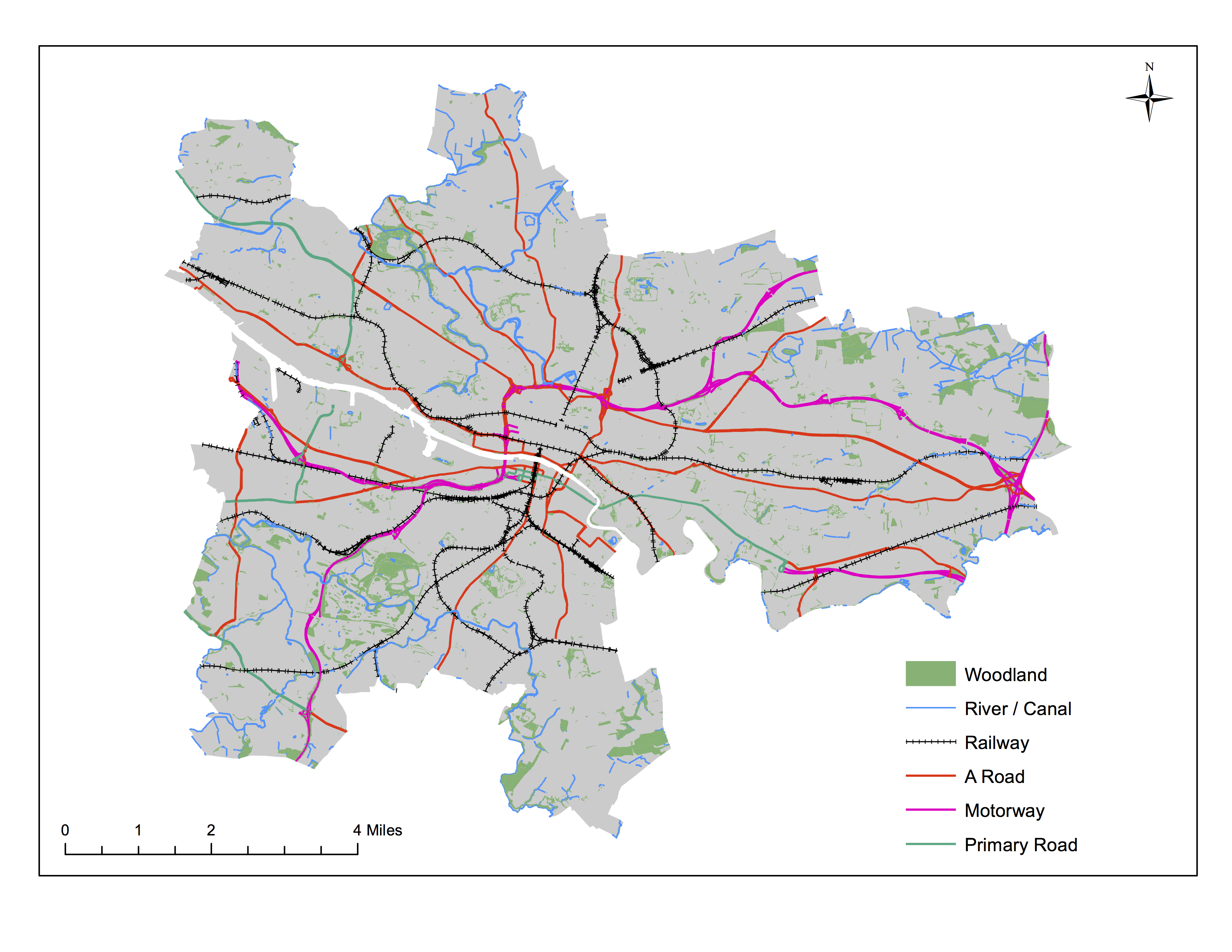
There has also been an interesting spin off from this research. Within Glasgow, we found a lot of neighbourhoods that were right next to each other but were very different in social and economic terms. We called these between-neighbourhood differences ‘social cliffs’. It prompted us to ask how such social cliffs occur. One idea is that they may be made more likely by physical barriers between the neighbourhoods, such as rivers, main roads or railways.The map below (click it to view full size) shows the kinds of physical features we’ve been looking at (note, our data are for the period before the new M74 motorway was opened).


figure2

Map based on data that are © Crown Copyright/database right 2012. An Ordnance Survey/EDINA supplied service.

Our research is now complete and we’re writing it up for publication. It seems that two kinds of physical feature are especially important. Where one or both of them lie along a neighbourhood boundary, it’s much more likely that the neighbourhoods will be very different socially, and economically. Which two do you think they are?


ESRC-Scottish Government/ Forestry Commission Scotland Studentship

ESRC-Scottish Government/ Forestry Commission Scotland Studentship – NOW AVAILABLE!

Designing and managing forests for health

Applications are sought from suitably qualified candidates for a joint ESRC-Scottish Government PhD three-year (‘+3’) studentship. The project entitled ‘Designing and ManagingForests for Health’ has been developed in collaboration with the Forestry Commission Scotland and seeks to examine the links between forestry and community health across Scotland.

The successful candidate will be based in the Centre for Research on Environment, Society and Health (CRESH) in the School of GeoSciences, University of Edinburgh. They will also be active members of the university’s OPENspace Research Centre and the Human Geography Research Group.

www.cresh.org.uk

www.openspace.eca.ac.uk

www.ed.ac.uk/schools-departments/geosciences/research/human-geography/overview

Applications will be particularly welcome from candidates with a social science / environmental background (e.g. geography, landscape architecture, sociology, environmental science), and quantitative methods will be emphasised in project and training plans. Applicants must have a Masters degree or equivalent in an appropriate field. A working knowledge in GIS would be advantageous.

Start Date: Available from January 2013

Applicants should submit the following documentation through the University of Edinburgh online system:

– A recent CV

– A cover letter explaining their interest in the project.

– A completed Equal Opportunities Monitoring form (available here for download)

The deadline for submission is 17th December 2012. Interviews will take place during January 2013.

Applicants may discuss the project with any member of the supervisory team: Professor Jamie Pearce (jamie.pearce@ed.ac.uk), Professor Catharine Ward Thompson (c.ward-thompson@ed.ac.uk) or Dr Niamh Shortt (niamh.shortt@ed.ac.uk).

Outline of Research

The international evidence suggests that exposure to ‘green’ environments (including forests) is associated with health benefits, including lower mortality rates, blood pressure and obesity levels as well as better self-perceived health. Further, previous studies suggest that the availability of green space may reduce health inequalities. Three key mechanisms have been implicated in explaining the green space and health associations. First, green space provides opportunities for physical activity (PA), and increased PA levels are associated with reduced risks of physical and mental illnesses.  Second, green space facilitates social contacts, for example through providing opportunities to meet others or participate in group activities. Third, exposure (physical and visual contact) to green space can promote recovery from attention fatigue and stress, and stress has been implicated in the aetiology of common chronic physical and mental illnesses.

Despite the volume of conceptual and empirical work on green space and health, important gaps in the knowledge base remain.  In particular, it is unclear whether different types of green environments (e.g. parkland, coastal areas and woodland) have differential effects on health. This research gap has left policy makers bereft of insights into which greening interventions are likely to result in the maximum benefits for health and well-being, and address health inequalities. The focus of this study is on forestry and population-level health. The aims of the research are to: (1) evaluate the literature considering the relationships between forestry (and other forms of green spaces) and health; (2) develop a health related forest classification for Scotland to inform a spatial strategy for the health-centred management of woodlands; (3) examine links between forestry and community health across Scotland; (4) develop a ranked profile of communities with ‘good’ or ‘bad’ forestry-related health outcomes with a view to developing a needs appraisal; (5) contribute to the knowledge base supporting a spatial strategy regarding the range and level of wellbeing benefits that can be expected from forestry.

Working in close collaboration with the Forestry Commission, this project will provide new insights into the relationship between forestry and health in Scotland. It will also deliver new GIS products to compliment the ongoing work in the Commission’s GIS system (SIFT). The project also supports the Commission and the Scottish Government work priorities including the Scottish Forest Strategy (particularly Key Theme 5 ‘Access and Health’) and numerous Scottish Government priorities (e.g. four national outcomes: tackling inequalities; securing longer and healthier lives; delivering sustainable places and valuing our natural environment).

CRESH Seminar 6th Nov: Air Pollution Kills! So What? Air Quality Engineering to Improve Public Health

CRESH Seminar Announcement

Air Pollution Kills! So What? Air Quality Engineering to Improve Public Health

Julian Marshall

Department of Civil Engineering

University of Minnesota

When? 11-12pm Tues 6th November

Where? Hutton Room (3.18), Institute of Geography, Drummond St, Edinburgh

Abstract
The World Health Organization estimates that urban air pollution is one of the top 15 causes of death globally (one of the top 10 causes in high-income countries), responsible for ~ 1.7% of deaths annual (high-income countries, 2.1%). How can we reduce those health effects? This presentation will discuss three investigations into that question. (1) Urban form describes the physical layout of an urban area – for example, city shape, population density, and “patchiness” of urban growth. We have found that air pollution is related to urban form, for cities in the US and internationally, raising the question of whether urban planning can help cities meet air quality goals. (2) In low-income countries, indoor air can be especially polluted, owing to combustion of solid fuels for heating and cooking. In a rural village in Karnataka, India, we conducted a randomized control trial of a higher-efficiency stove, to test whether the stove improves indoor air pollution, health effects, and climate-relevant emissions. (3) Prior research emphasizes the health benefits of active travel (walking, biking). Can urban planning increase active travel without worsening exposure to air pollution? We explore spatial patterns in risks from those two factors (physical inactivity; and exposure to air pollution). A constant theme through these topics is environmental justice: which groups have higher exposures to air pollution, and how exposure correlates with demographic attributes such as race and income.


CRESH Symposium on Physical Activity and the Environment. November 19th

One day symposium – Physical Activity and the Environment

School of Geosciences, Drummond Street, University of Edinburgh

19th November 10.00 – 16.30

Evidence exists to suggest that physical activity is important for health and that low levels of physical activity are of increasing concern. The global importance of this was highlighted in a recent collection of papers in The Lancet quantifying the public health importance of physical activity. The local environment can provide opportunities for promoting or hindering engagement in physical activity and recent research in this field has sought to understand, if and how, features of the local environment shape individual health related behaviours, and in turn, area level health inequalities.

This workshop will bring together academics, public health professionals and policy makers to discuss emerging research and interventions in this area. Speakers from both academia and public policy will present current research and interventions and a group discussion will consider the future for work in this area.

9.30        Coffee and registration

10.00     Welcome

10:15     Prof Nanette Mutrie, Sport, Physical Education & Health Sciences, University of Edinburgh

10.45     Ian Findlay, Chief Officer, Paths for all

11.15     Coffee

11.45     Dr Niamh Shortt, CRESH, University of Edinburgh

12:30     Lunch

13.30     Sharon Allison, Physical Activity and Health Alliance Coordinator, NHS Health Scotland

14.00     Prof Andy Jones, Centre for Diet and Activity Research (CEDAR), University of East Anglia

14.30     Coffee

15.00     Where next for research and policy on physical activity and the environment (Group discussion facilitated by Prof Richard Mitchell and Prod Jamie Pearce)

16.30     Wine reception


Places are limited and will be allocated on a first come first served basis.  Please register your interest by Friday November 2nd by contacting Fiona Hartree on 0131 651 4348 or email Fiona.Hartree@ed.ac.uk

16th Emerging New Researchers in the Geographies of Health & Impairment (ENRGHI) conference

ENRGHI 2012

The 16th Emerging New Researchers in the Geographies of Health & Impairment (ENRGHI) conference took place in London at the beginning of September, jointly organised by University College London and Queen Mary’s University College London.

ENRGHI is a conference run for and by post graduate and early career researchers and provides an innovative and supportive forum for presenting and sharing ideas.  The conference consisted of two days of posters and presentations, as well as opportunities for networking, socialising and a careers Q&A session.

CRESH PhD student Anna Kenyon presented on the socio-spatial distribution of environments that are likely to support walking throughout urban Scotland, concluding that there is little evidence of inequality in the distribution of good walking environments in relation to area deprivation.

The talk sparked debate about which features of urban environments are the most important to include in measures of area walkability. This led to a wider discussion about the balance, when measuring environmental determinants of health behaviours, between the benefits of using a large study area, such as urban Scotland, and the inevitable technical constraints this places on the specificity of measures used.

Other delegates made presentations on a diverse range of topics and attendees voted for the presentation they thought was the best.  Topics of the winning presentations were: Women’s detention and mental health, Environmental and socio economic factors associated with leishmaniasis outbreaks in Saudi Arabia, and Inequalities in the provision of treatment for chronic kidney disease in the UK.

Dr. Maurzio Gibin (Birkbeck University of London) gave a plenary speech on geovisualisation techniques and presenting geographic data to non-expert audiences as well as ingenious methods of presenting geographic data.  Prof. Steve Cummins (Queen Mary University of London) presented on the benefits of using of natural experiments in geography.  Prizes for the best three delegate presentations were presented by Dr Jim Dunn, deputy editor of the Journal of Epidemiology and Community Health.

Postgraduates and postdoctoral researchers travelled from countries including Canada, France, Australia and the Netherlands as well as throughout the UK to attend the conference.

Details of the next ENRGHI conference as well as including photos of the event, posters and prizes from this year can be viewed on the ENRGHI website: http://enrghi2012.wordpress.com/


Anna Kenyon

October 2012

London 2012: inspiring a generation and regenerating East London?

Immediately following the Olympics, Prime Minister David Cameron announced that government funding to support Team GB athletes would increase up to the Rio 2016 Games. “The motto of these Games has been ‘Inspire a generation’. Nothing has been more inspirational than seeing our elite athletes win Gold this summer. There’s a direct link between elite success and participation in sport” he said.

This link between the inspiration of elite athletes and wider public participation in physical activity was a key claim made for the London Olympics from the start. The London 2012 Candidate file, part of the initial bid for the Games, stated that the Olympics would: “…inspire a new generation to greater sporting activity and achievement, helping to foster a healthy and active nation.”

Furthermore, the Government’s Legacy Action Plan published in 2008 promised that the Olympics would “transform the heart of East London” the home of the Olympics Park by “turning one of London’s most deprived areas into a world-class district for living, leisure, business and sport, with safe and sustainable neighbourhoods, new parkland, new homes, jobs, and social and leisure facilities for generations to come.”

So, what is the evidence regarding the impacts of large scale sporting effects on public participation in sport and area regeneration?

A review of research into the impact of mass sporting events on physical activity among the wider population by Murphy and Bauman (2007) suggested a lack of evidence for a public health benefit. A systematic review of the health and socioeconomic impacts of major multi-sport events published in 2010 by McCartney and colleagues found that few studies looked at health outcomes and concluded similarly: “The available evidence is not sufficient to confirm or refute expectations about the health or socioeconomic benefits for the host population of previous major multi-sport events.”

Sport is not the only way that London 2012 might affect health and wellbeing. Huge amounts of construction and regeneration in East London have already taken place or are planned. Yet the impacts of that are also uncertain. A review by Davies (2010) of sport and economic regeneration also highlighted that “…no comprehensive longitudinal post-event study has ever been undertaken on the economic regeneration impacts of the Olympic Games”.

The impacts of regeneration for London 2012 are being closely watched. A longitudinal study of the health and social impacts of the London Olympics upon families in East London is already underway. The Olympic Regeneration in East London (ORiEL) Study, led by Professor Steven Cummins at Queen Mary, University of London, is a five-year study, following approximately 1,800 school children and their parents in Tower Hamlets, Hackney, Newham and Barking and Dagenham. It will assess their health and well-being over time. The results of this study should demonstrate whether claims that have been confidently made for the long term public benefits of the 2012 London Olympic games, and the regeneration accompanying them, prove to be true.

By Helena Tunstall

New review shows socio-economic position over the life course affects quality of life

A new systematic review looking at the relationship between socio-economic position over the life course and quality of life has just been published in BMC Public Health by CRESH PhD student Claire Niedzwiedz, Rich Mitchell and colleagues at the University of Glasgow and MRC/CSO Social and Public Health Sciences Unit.

The review’s aim was to gather and examine evidence about how people’s quality of life as adults depends on the social and economic circumstances they have experienced throughout their life, from childhood onwards. Do childhood circumstances matter? Does it help if people move ‘up’ the socio-economic ladder? Does it harm if people move ‘down’?

In chronic disease epidemiology, several conceptual models have been developed to help explore these ideas and they provide a foundation for investigating life course effects. The accumulation model hypothesises that adverse socio-economic experiences have a cumulative, dose–response effect on health. The latent model (or critical period) suggests that circumstances during childhood have an effect on health, over and above adult circumstances. Pathway models emphasise the importance of trajectories across the life course. Social mobility models are usually divided into intra-generational and inter- generational where inter-generational mobility refers to a change in social class between generations and intra-generational mobility is the movement between different social classes in adulthood. The mobility models suggest that change in your socio-economic position will affect health, and in general lead us to expect that movement ‘up’ the social ladder is good for health, but movement down may be bad.

The review identified 12 relevant articles which used data from different five countries.

The evidence supported an overall relationship between socio-economic position over the life course and quality of life but results for each life course model were mixed.  There was some evidence to suggest a latent effect of childhood socio-economic position on later quality of life for women, but the effect was not found for men. Overall, results for social mobility models suggested little effect. We found very few studies that actually assessed inter-generational mobility or accumulation and pathway effects.

There was a very wide range socio-economic position measures, outcomes, analytic techniques, reference populations and quality across all the studies we looked at. This led to a key message from the review; the need to increase study comparability. A second key message was the need for comparable data and studies from different countries. This may help to uncover aspects of different societies that influence the relationship between socio-economic position over the life course and quality of life.

You can access the article here: http://dx.doi.org/10.1186/1471-2458-12-628.


Stigma, environments and health inequalities: why should we be interested?

In recent years there has been a great deal of interest amongst health researchers in the role of social stigma in affecting health. Social stigma can be articulated as a majority view that works to spoil the identity of others on the basis of a discriminating characteristic such as race, gender or class. The social stigma associated with some minority groups has been shown to have health salience in terms of providing an obstacle to gaining access health care, housing provision, welfare, employment and other underlying factors affecting health. Groups that have been the subjects of research include disabled, homeless and itinerant populations and this body of work has revealed the multitude of interpersonal and institutional factors linking discrimination with health. Stigma has also been adopted as a deliberate strategy in health promotion initiatives, most notably in tobacco control with recent work beginning to question whether the denormalisation and stigmatisation of smoking (and the smoker) has reached its limit as a public health goal.

Given the long tradition of work on stigma and health, and the importance of stigma for establishing and perpetuating health inequalities, it is perhaps surprising that few researchers have considered the potential significance of place and the environment in establishing, perpetuating and mediating social stigma. In a recent commentary* on a Japanese paper on place-based discrimination published in the journal Social Science and Medicine, I argue that geographers (and others with interests in place, space and health) could productively consider the role of spatial stigma in affecting the health of local residents. Spatial stigma arises in places with notoriety in the public discourse, and that are constructed as ‘no-go zones’ or ‘sink estates’ that require constant policing.  Neighbourhoods such as Toxteth in Liverpool, South Central in Los Angeles or the French banlieues have for instance been prejudiced by deep-rooted geographical discrimination.  Key to the argument in the commentary is that there are a range of consequences for population health of residing in a highly stigmatised community. Yet very few empirical studies have tested the salience of spatial stigma in affecting population health.

So why should researchers with interests in the environment and spatial inequalities in health be concerned with place-based stigma? In the Social Science and Medicine commentary, I suggest that health might be compromised by spatial stigma through a series of (non-mutually exclusive) individualised and institutional pathways, which in turn can exacerbate geographical inequalities in health. These include:

1. Being ‘looked down on’ because of residing in a stigmatised community can detrimentally affect a number of life chances such as education and training opportunities, employment prospects and the prospects of developing interpersonal relationships. These factors have all been implicated in studies of health.

2. Stigma relating to particular places may act as ‘badge of dishonour’ that results in local residents taking actions such as concealing their address, avoiding receiving visitors or providing excuses to others for where they live. These feelings of shame can work to spoil, manipulate and mediate individual identities and social relations and affect health (e.g. health behaviours or mental health).

3. Place-based stigma affects the levels investment and disinvestment of public and private resources put into the local community. Progressive social policy is undermined by the lack of investment in the local infrastructure, housing and other services that provide the opportunities for healthy living.

4. Social networks, community social bonds and collective efficacy are affected by residents’ withdrawal from the public realm in response to the perceived threats associated with spatial stigma (e.g. crime). The breakdown of these community ties is detrimental to physical and mental health outcomes of local populations.

In short, there is plenty of evidence from the urban sociology and urban geography literature that through a variety of intersecting pathways place-based stigmatisation is harmful to the life chances of local residents. The population health consequences of place-based stigma are however less well established; understanding these pathways is an important challenge for researchers with an interest in the environment and health. This challenge is particularly important during a period of austerity with major reductions in state investment in a range of health related infrastructure. A likely consequence of this retrenchment is the heightened stigmatisation of many socially disadvantaged communities with potentially disastrous implications for public health and health inequalities.

Jamie Pearce, August 2012

jamie.pearce@ed.ac.uk

 *Library access required; if you are unable to get hold of the paper then I’d be please to email you a copy (jamie.pearce@ed.ac.uk). .

Neighbourhood built environment related to transport and leisure physical activity

A new study involving CRESH researchers on neighbourhood built environments and  transport and leisure physical activity has recently been published in the journal Environmental Health Perspectives. The New Zealand study collected data on the urban built environment (destination access, street connectivity, dwelling density, land-use mix and streetscape quality) and surveyed 2,033 adults who lived in 48 New Zealand neighbourhoods. The findings suggested associations of neighbourhood destination access, street connectivity, and dwelling density with self-reported and objectively measured PA were moderately strong.  You can find the paper here: http://dx.doi.org/10.1289/ehp.1104584

Key questions for researching natural environments and health

There was a long session on natural environments and health at the Royal Geographical Society /IBG conference yesterday. It was put together by Dr Liz Richardson, from CRESH, and it featured an intriguing range of 9 papers. All were exploring the relationships between natural environments and health, but there was great variety in the perspectives, methodologies and opinions on display. The session felt like a nice summary of many current issues and questions in the field.

You can read the abstracts for the papers in the first part of the session here, and the second part of the session here. At the end, I led a discussion which tried to bring together the range of questions and perspectives in the session. Here’s what we talked about.

What can we expect natural environments to do for us? Nina Morris, from Edinburgh University, used the lovely expression ‘mission creep’ in her talk and it prompted us to note that green spaces suddenly seem to be responsible for doing an awful lot. If you believed everything you read, you might think that your local park or forest will cure all ills, make everyone thin, make everyone happy, be a boon to the local economy, prevent climate change and protect rare species. It’s likely that some natural environments can contribute to some of these things, some of the time, but they’re not miracle-workers. Keeping expectations realistic and evidence-based is important.

Several talks began with the assertion that green space is thought to be, (or even known to be) ‘good for health’. There were also anecdotes that, when hearing about plans for or results from research on natural environments and health, some policy makers, journalists (and even research funders) reply “we know that already”. So, we debated, is our job done? Do we now know enough about the relationships between natural environments and health? Can we stop researching it and turn our attention to something else? Perhaps not surprisingly, a room full of researchers disagreed… I do think they had good reason though. Some of the papers really challenged what we thought we knew about whether and how natural environments are related to health. The paper from Katherine Ord, a PhD student at CRESH, for example, strongly questioned the role of physical activity in the relationship between green space and health. Whilst we’re still discovering that we know relatively little about how, when and for whom natural environments matter for human health and wellbeing, there is more work to do. The fact that many people seem now to believe that ‘green space is always good for everyone’, makes the research even more important.

Assuming that there is more work to do, what kind of research is needed? There was much talk about the value of different approaches. Qualitative, quantitative and mixed methods studies were all on display and the range of insights and types of knowledge was a powerful argument for variety in study design and methodology. The epidemiological studies CRESH specialises in are important for learning if and how natural environments contribute to the health and wellbeing of populations, and how they relate to health inequalities. But the insights from qualitative work into how and why individuals use, move within and feel about natural spaces provide crucial depth in understanding. The need to study non-natural environments as part of our research (akin to a control group) was another thread running through the debate. This is vital to be sure that any apparent impacts on health and wellbeing are a function of the natural environment itself and not something else, like just being in a different environment, or a much loved place.

Finally, we discussed the need to understand how we should manage natural environments and our access to them, to maximise their potential benefits. A paper from Michelle Newman at Coventry University, for example, took a critical look at the issues surrounding children’s access to green space in schools. Its exploration of ideas about accessing ‘risky’ environments and who is paying for (and therefore controlling) access to these spaces, prompted wider thoughts about what kinds of spaces to preserve, make accessible or construct. There is a need to ask who has access and who uses their access. Governments and policy makers now explicitly acknowledge the values of green space for health and wellbeing, which is great. Would it be so great if they started to set targets for green space use, or even compel it?

It was a fascinating, useful (and long…) session.

Regular physical activity in natural environments halves risk of poor mental health

Regular exercise in a natural environment may cut the risk of suffering from poor mental health by half, according to a new study published by CRESH today.

Rich Mitchell studied the use of natural and non-natural environments for physical activity, like walking, running and cycling. He found regular use of natural environments such as forests and parks seemed to protect against mental ill-health, whilst use of non-natural environments like a gym, did not.

Previous experimental studies have shown that exercise in natural environments has a positive effect on biomarkers and self-reports of stress, on mood and reported levels of fatigue. This new study was designed to look at whether such effects can be detected in the general population in every day settings.

Data from the Scottish Health Survey 2008, described the different environments in which 1890 respondents were physically active, including woodlands, parks, swimming pools, the gym, the streets and the home. The data also showed how often respondents used each environment and how physically active they were overall. Rich looked at the association between use of each environment and the risk of poor mental health as measured by the General Health Questionnaire. Only activity in natural environments was associated with a lower risk of poor mental health.

Rich said “I wasn’t surprised by the findings that exercise in natural environments is good for your mental health, but I was surprised by just how much better it is for your mental health to exercise in a green place like a forest, than in other places like the gym.”

 “Woodlands and parks seemed to have the greatest effect, so the message to doctors, planners and policy makers is that these places need protecting and promoting.

 “The results suggest that making the decision to exercise in a natural environment just once a week could be enough to gain a benefit. Any additional use may have a bigger effect.”

The study, published online by Social Science & Medicine, revealed that local pavements or streets was the environment most commonly used regularly for physical activity, followed by home/garden. Around 50 per cent of the sampled group reported using any natural environment at least once in the last month.

Rich did not know the type, duration or intensity of activity conducted in each environment and noted that this was a weakness in the study, but is also an area that could be looked at in more detail in future.

You can see Rich talking about the study here: http://itunes.gla.ac.uk/web/news/video/RichardMitchell.mp4 

You can read the full study here http://dx.doi.org/10.1016/j.socscimed.2012.04.012 (access required). If you don’t have access and want to read it, please email Rich at Richard.Mitchell@glasgow.ac.uk and ask for a copy.

The research was funded by the Scottish Government’s Rural and Environmental Science and Analytical Services division (RESAS).