Category: Inequalities

  • How do residents perceive alcohol availability and its impact on drinking behaviour?

    We have a new paper out in Health and Place, led by our colleagues Elena Dimova and Carol Emslie at GCU.

    We wanted to improve our understanding of how residents conceptualise alcohol availability and its impact on behaviours. The study used data collected here in Scotland, a country with particularly high levels of alcohol-related harm, to explore the perspectives of residents, on local alcohol availability and how it might affect drinking behaviours.

    We conducted 11 online focus groups with 45 participants, living in nine strongly contrasting neighbourhoods in Scotland, characterised by varying levels of alcohol retail density change, urbanity and deprivation. We explored participants’ perceptions of their local alcohol environment and alcohol availability, and any perceived relationship between alcohol availability and alcohol-related behaviours.

    What did we find? Our participants challenged established notions that alcohol availability is characterised primarily by density of alcohol outlets. Instead, they felt availability is about accessibility, ease of purchase and ubiquity of alcohol. Residents drew distinctions between areas of varying deprivation and conceptualised alcohol availability as complex, characterised by market segmentation, and related to price, advertising and the wider environment.

    This is one of the few papers so far that has explored residents’ perspectives of local alcohol availability and its relationship with alcohol use. It highlights that residents view alcohol availability as encompassing more than just the physical presence of outlets, recognising also the variety of outlet types and the connections between availability, pricing, and advertising.

    Policies to reduce local availability should consider residents’ perspectives and account for contextual factors such as shifts in the retail landscape and the availability of alcohol-free recreational alternatives.

  • Recession, austerity and health

    We recently developed a project summary for an ESRC-funded study looking at the impact of the financial crisis and subsequent austerity measures on mental health and wellbeing in the UK. The summary for the CRESH project (full title: Recession, austerity and health: changing area socio-economic conditions and their relationship to individual health and wellbeing outcomes in Scotland) includes the key findings, links to papers published, details of some of the dissemination activities, and other useful resources. You can read more in the pdf below:

  • Crime and violence in the neighbourhood affects our mental health

    Crime and violence in the neighbourhood affects our mental health

    Our review published in Social Science and Medicine synthetized available evidence on the relationship between living in neighbourhoods affected by crime and violence, and residents’ mental health problems. The findings clearly showed that people residing in unsafe areas are more likely to report mental health problems, including depression and psychological distress, but we also found some indication for elevated levels of anxiety and psychotic symptoms.

    The places where we live, work and age are important in shaping our health and wellbeing. There have been a number of recent studies that have considered whether and how physical and social features of these places may influence mental health. Characteristics of places including economic and social disadvantage, lack of social cohesion between neighbours or restricted access to green space are seem to be important in affecting the mental health of local people. Another aspect of place that might matter is the level of local crime and violence but we don’t have a clear picture of the importance of these processes because the research in this area has not be systematically reviewed and assessed.

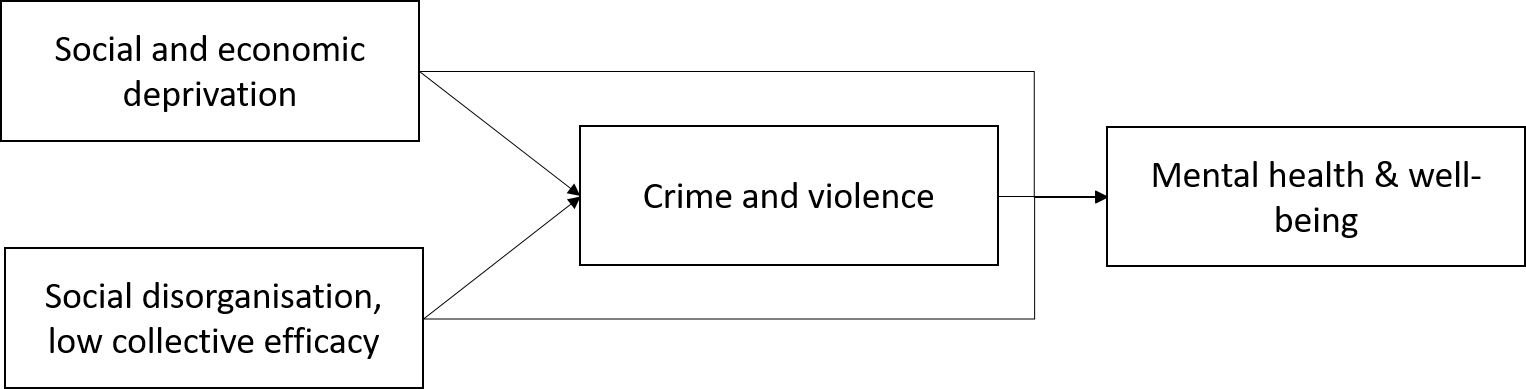
    Crime events tend not to be random but instead concentrate in certain neighbourhoods. Research in criminology suggests that disadvantaged and low-income areas are particularly affected by crime and violence, especially when there is a lack of social cohesion in the area and it is therefore difficult for people living in this area to collaborate together and make the changes that they want to see in their community (Figure 1). We also know that within most neighbourhoods there are particular places   where crime is more frequent (e.g. areas with poor quality street lighting).

    Figure 1: Neighbourhood crime and mental health

    Once crime occurred, people directly affected as being victim or witnessing crime, are at risk of developing mental health problems, such as depression and post-traumatic stress disorder. However, and importantly, residents of higher crime areas, even without direct experiences of crime, may be affected through increased fear and chronic stress, and through other responses such as lower engagement in physical and social activities in their communities. These can all contribute to mental health problems in high crime areas.

    In order to get a better understanding of what the international evidence tells us about the connections between local crime and mental health, we screened over 10,000 research articles from 11 major databases and identified 63 relevant studies published in over 30 countries and across a wide range of disciplines (e.g. psychology, public health, economics and criminology). We then used these findings to create a comparable metric across studies which were then quantitatively summarized across the 63 studies – an approach known as ‘meta-analysis’. We found that people living in local areas with higher levels of crime and violence suffered more often from depression and psychological distress. A variety of additional analyses confirmed these results, and findings remained robust when we considered differences across sample and methodological characteristics, such as age of participants, study design or methodological quality. We found comparably fewer studies focussing on anxiety and psychosis, but they also pointed towards increased mental health problems in unsafe neighbourhoods.

    This systematic review and meta-analysis is the first in the literature exploring the relationship between local crime and mental health. Although the impact of neighbourhood crime on mental health is comparably smaller than the impact of well-established risk factors, such as being unemployed or experiencing maltreatment, we have to consider that large parts of the population are living in areas seriously affected by crime. Urban centres, especially in low- and middle-income countries, experienced a recent surge in crime and violence, which likely affects residents’ well-being.

    Neighbourhood crime and violence is a significant social, economic, legal and global health concern. The results of our review are important because they suggest that reducing crime levels and increasing the feeling of safety among residents can benefit population mental health. Policymakers might consider targeting the physical (e.g. reducing alcohol availability, area rehabilitation) and social (e.g. supporting social cohesion and participation) determinants of crime by complex neighbourhood interventions, as these have the potential to reduce crime levels in a sustainable way. Healthcare planners should be mindful about the increased mental health needs of communities affected by high crime. Scaling up mental health services by providing access to treatment for those in need and considering preventive measures, such as developing skills and coping strategies, may tackle the mental health burden of disadvantaged neighbourhoods.

    You can find the paper here:

    Baranyi G, Di Marco MH, Russ TC, Dibben C, Pearce J. The impact of neighbourhood crime on mental health: A systematic review and meta-analysis. Social Science & Medicine 2021; 282: 114106. https://www.sciencedirect.com/science/article/abs/pii/S027795362100438X

  • New job at CRESH: Postdoctoral Researcher, Environment and Health

    New job at CRESH: Postdoctoral Researcher, Environment and Health

    This is a full time (35 hours per week), fixed term post available for 3 years.

    The salary for this role is £33,797 – £40,322 per annum.

    We are seeking to appoint a Postdoctoral Researcher in the field of ‘Environment and Health  for a period of 3 years to contribute a UK Prevention Research Partnership (UKPRP) Consortium – SPECTRUM (Shaping Public hEalth poliCies To Reduce ineqUalities and harm) www.ed.ac.uk/spectrum. SPECTRUM has an ambitious programme of research, knowledge exchange and public engagement focusing on the commercial determinants of health relating to tobacco, alcohol and food. In this role you will work under the supervision and mentorship of Professor Jamie Pearce and Professor Niamh Shortt.

    The successful candidate will play a lead role in a programme of work aiming to identify how the local environment can be shaped to change behaviour, prevent harm and reduce inequalities. The aim is to examine the intended and unintended impacts of (and interventions in) the local commercial environment on the consumption of unhealthy commodities. The focus of this role will be to conduct spatial and quantitative analyses, contribute to final publications and help to accelerate the impact of the research.

    Informal enquiries to Prof Jamie Pearce (jamie.pearce@ed.ac.uk), Prof Niamh Shortt (niamh.shortt@ed.ac.uk)

    For more details and how to apply click here.

  • What next for tobacco control in Scotland?

    New research from the CRESH team using data from 124,566 shopping baskets purchased in convenience stores across Scotland has found that the purchase price of tobacco is lower in more disadvantaged neighbourhoods, largely because of the higher sales of the cheapest brands in these areas.

    Cigarette smoking is one of the leading causes of preventable ill-health, hospitalisations and deaths in Scotland. Approximately 19% of adults in Scotland smoke, this rises to 32% in our most deprived fifth of neighbourhoods and falls to 9% in the most affluent neighbourhoods. As Scotland moves towards a ‘Tobacco Endgame’ the Scottish Government have a target to reduce smoking prevalence to less than 5% by 2034. A recent review of smoking projections by CRUK however suggests that Scotland may miss this target by 16 years in the poorest neighbourhoods. It is important that we continue to explore all potential determinants of smoking, particularly those that drive smoking in our most deprived communities.

    We know that tobacco price is one of the most important determinants of smoking behaviour and that many smokers are price sensitive. Whilst it may appear that all tobacco products are becoming increasingly expensive, research suggests that the average tobacco price in the UK has remained relatively unchanged in real terms over the past 20 years in spite of numerous tax increases. A practice, known as ‘undershifting’, has seen tobacco companies limit price increases on the cheapest brands and instead increase the price of the most expensive brands by larger margins, thus absorbing the tax increases on the cheapest cigarettes allowing them to remain cheap (Hiscock et al. 2018).  As a result, the price of the lowest priced cigarette brands has remained relatively steady and the tobacco market as a whole has become increasingly stratified by price between the cheapest ‘sub value’ , ’value’, ‘mid price’ and high priced ‘premium’ brands. We wanted to understand these differentials in price a little better, so we carried out some research that was published recently in Tobacco Control. We explored whether the price paid for tobacco (both cigarettes and roll your own tobacco) was different in different types of neighbourhoods. We compared areas by deprivation, by the density of tobacco outlets and by rurality.

    We analysed tobacco purchase data provided to us by The Retail Data Partnership. We looked at more than 124,000 purchases in 274 stores across Scotland in April 2018. For cigarettes the average price paid for a pack of 20 was £8.49, ranging from £7.20 to £13.25. For roll your own tobacco (RYO) 30g the average price paid was £12.14, with prices ranging from £9.80 to £15.99. We found that the price paid for tobacco did vary by neighbourhood type. In neighbourhoods with the lowest average household income the average purchase was 50p less for a pack of 20 cigarettes, and 34p less for roll your own tobacco compared with the most affluent neighbourhoods.

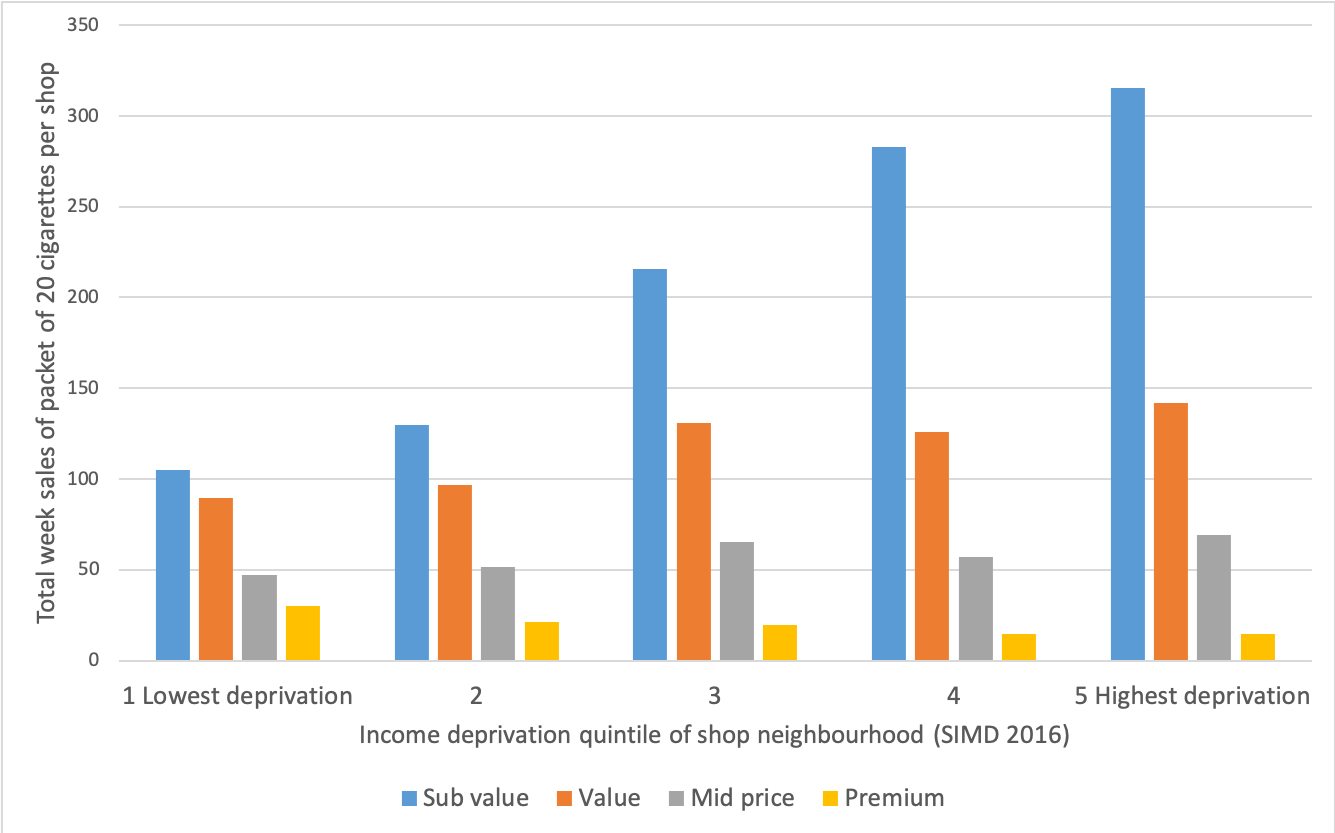
    We then asked whether this was driven by individual brands being cheaper in more deprived areas, or whether cheaper, sub-value, brands were just more popular in such places. We found little evidence that individual brands were priced differently. Although the cheaper brands are the most popular in all neighbourhoods and across Scotland, accounting for 52% of sales, there’s a big difference in popularity between more and less deprived areas, In the most deprived areas these brands account for 58%  of sales, but in most affluent areas it was just 39% (See Figure 1 below). So, it is the dominance of cheaper brands in more deprived areas that drives the 50p difference in average price paid per pack between deprived and affluent areas. Remember this matters because the tobacco companies work to subdue tax-based price rises on the cheapest brands.
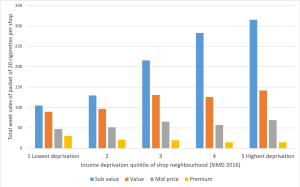
    We also explored whether the density of tobacco retailers and/or rurality had an impact on tobacco price. We found little evidence of a density effect, but we did find that the individual brands analysed were significantly cheaper in rural areas.

    So what does this mean and what can we take from this research? It is clear from the CRUK review that we need to work harder in order to reach the 2034 target of less than 5% of the population smoking. Price is a lever that we can pull, but to date this has been largely done through tax increases. This research shows us that the cheapest brands are the most popular in all neighbourhood types, but much more so in our most deprived neighbourhoods where smoking rates are highest. We found that the price paid for tobacco is lower in more deprived areas compared to more affluent areas. Our results confirm that the dominance of cheaper, so called ‘sub-value’ brands in more deprived areas, is a driving force behind the difference in price paid for tobacco between neighbourhoods. This highlights the importance of cheaper tobacco products to the consumer and the market.  Cheap tobacco may help tobacco companies to retain price sensitive consumers who live in the most deprived areas, which, in turn, contributes to health inequalities. In addition to increases to the duty rates on tobacco, more radical policy responses are likely to be required. These include a combination of minimum unit pricing (MUP) and a price cap at the upper end. The MUP would raise the cost of cheaper cigarettes and the price cap at the upper end would prevent the more expensive brands being used to ‘protect’ the cheaper ones from tax rises.

    With growing international interest in the ‘Tobacco Endgame’, policymakers should identify measures that counter industry tactics that enable the continued sales of cheap tobacco. We published this paper in the first week of the COVID-19 pandemic in the UK. These are clearly strange times and we should rightly focus on the public health impacts of the global pandemic, and in particular the vast health inequalities that are arising. We must not however forget that the public health challenges we were faced with before this pandemic remain. Tobacco, and other unhealthy commodities, require our attention and the inequalities that arise from them remain a matter of social justice.

    You can find the paper here:

    Shortt, N., Tunstall, H., Mitchell, R., Coombes, E., Jones, A., Reid, G. & Pearce, J. Using point-of-sale data to examine tobacco pricing across neighbourhoods in Scotland. Tobacco Control, Published Online First: 19 March 2020. doi: 10.1136/tobaccocontro

    References

    Hiscock R, Branston JR, McNeill A, et al. Tobacco industry strategies undermine government tax policy: evidence from commercial data. Tob Control 2018;27:488 LP – 497. doi:10.1136/tobaccocontrol-2017-053891


  • Neighbourhood problems lead to depression, but effects vary across countries

    Neighbourhood problems lead to depression, but effects vary across countries

    Neighbourhood characteristics are linked to mental health in older age, but the magnitude of effects might differ across countries. Using data from 16 different countries, our paper in the American Journal of Epidemiology indicated that country-level social, political, economic and environmental characteristics may explain differences in how neighbourhood affects mental health.

    Depression, local area and macro-level context

    Depression is a common mental disorder with substantial disability and economic burden worldwide. More than 10% of adults aged 50 years and older present depressive symptoms with an even greater proportion of the population suffering in older age groups. Older adults spend more time in their neighbourhood, so that social and physical features of the residential area become increasingly important for them.

    Signs of neighbourhood disorder, such as crime, vandalism and exposure to rubbish, are thought to indicate problems in the residential environment, by elevating the level of stress and fear among residents. On the other hand, positive aspects of neighbourhoods such as social cohesion – which is often characterised as a sense of community, help and support among neighbours – have the potential to buffer the effects of stress and contribute to healthy ageing. Both neighbourhood disorder and social cohesion has been linked to mental health problems.

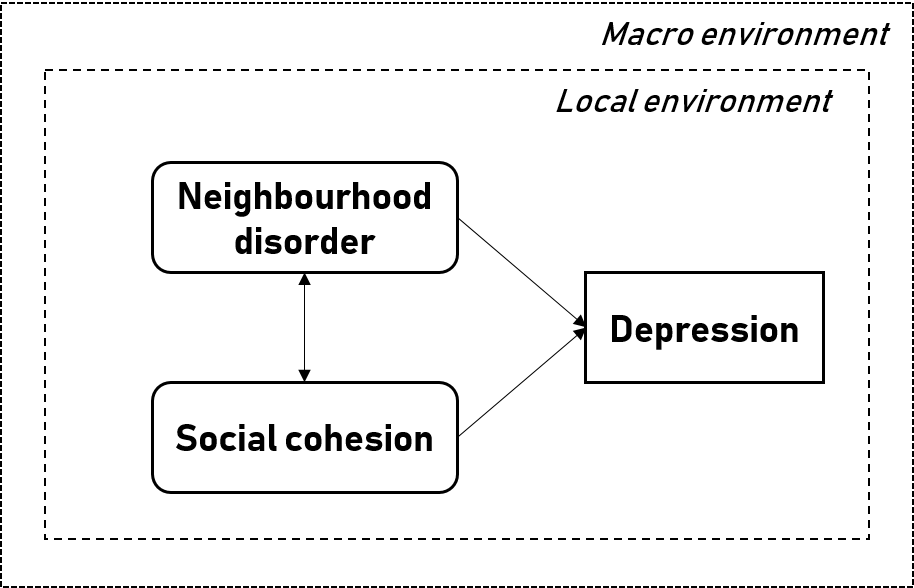
    Neighbourhoods are situated within macro-level environments capturing larger geographic areas such as local authorities, counties or even countries (Figure 1). Policies, as well as social, economic and environmental characteristics of macro environments can affect citizens’ life and health, and also shape the physical and social characteristics of local communities, where people live and age. It is important, as both local and macro-level environments are modifiable, presenting opportunities for improving population mental health and contributing to healthy ageing.

    Figure 1: Local and macro-level determinants of depression

    Neighbourhoods influence mental health among older adults

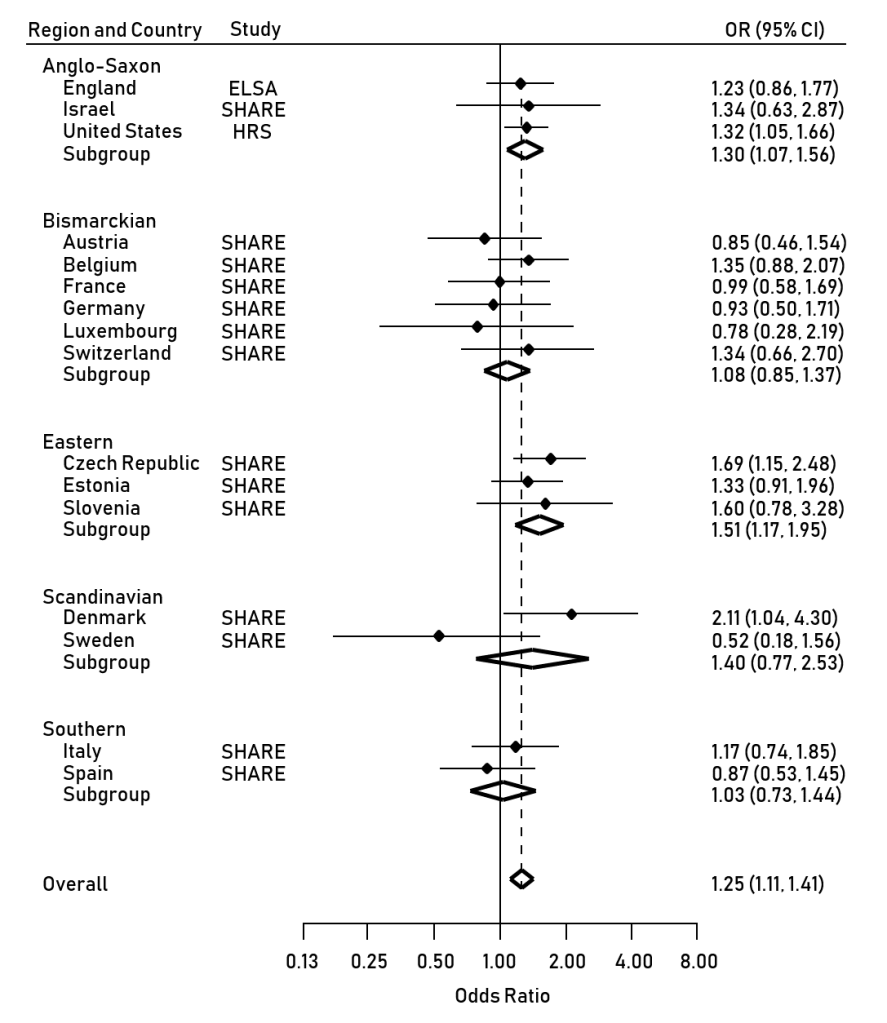
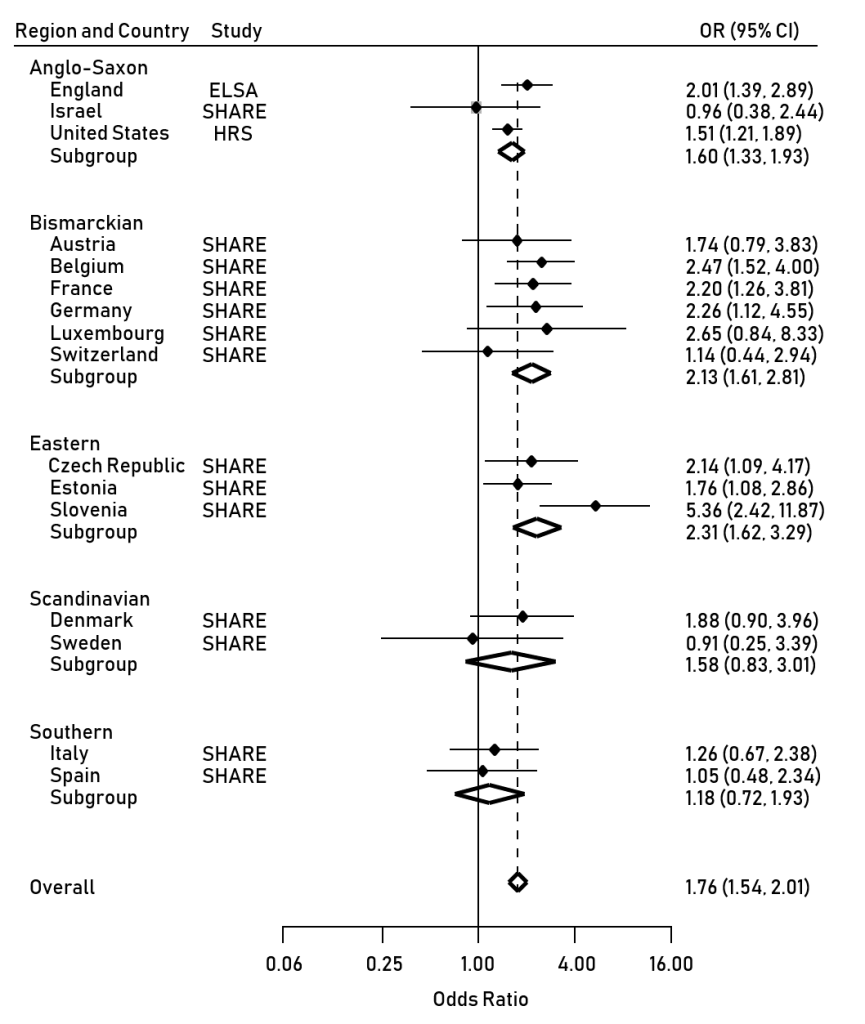
    We investigated the associations between neighbourhood disorder, lack of social cohesion and depression among adults aged 50 and over. Longitudinal information on perceived neighbourhood characteristics and depressive symptoms across 16 high-income countries were utilised, including 32000 older adults. Results showed that living in an area with significant neighbourhood disorder increased the chance of developing depression (Figure 2), and so did lack of social cohesion (Figure 3). If people were already in retirement, effects became stronger.

    Figure 2: Neighbourhood disorder impacting depression across 16 high-income countries. Odds Ratios <1.0 indicate decreased odds of depression by exposure to neighbourhood disorder; Odds Ratios >1.0 express increased odds. Small black diamonds are country-specific estimates, larger empty diamonds are pooled effects across group of countries. Abbreviations: ELSA, English Longitudinal Study of Ageing; HRS, Health and Retirement Study; SHARE, Survey of Health, Ageing and Retirement in Europe.

    Neighbourhood effects differ across countries

    As the magnitude of the associations varied across the 16 included countries, we further explored country-level differences.

    Figure 3: Lack of social cohesion impacting depression across 16 high-income countries. Odds Ratios <1.0 indicate decreased odds of depression by lack of social cohesion; Odds Ratios >1.0 express increased odds. Small black diamonds are country-specific estimates, larger empty diamonds are pooled effects across group of countries. Abbreviations: ELSA, English Longitudinal Study of Ageing; HRS, Health and Retirement Study; SHARE, Survey of Health, Ageing and Retirement in Europe.

    Amongst other, we found that in countries with higher population density, lack of social cohesion was more detrimental for mental health. Particularly in the oldest age groups, where limited mobility is more likely present, neighbours can be an important source of social and emotional support. In countries where people live closer to each other, not having proper social ties to neighbours can lead to social isolation and higher risk of developing mental health problems.

    Also, in countries with higher pension spending, the adverse effect of neighbourhood disorder on depression was buffered for individuals already in retirement. It is plausible that by providing material resources, more generous welfare states equip older people to deal with stressors arising from less safe and deteriorated residential neighbourhoods.

    Macro-level context and policy recommendations

    Understanding how larger context can influence mental health inequalities across neighbourhoods has the potential to inform policy, and provide more tailored recommendations. For example, tackling crime and vandalism in countries with lower pension spending would be particularly beneficial for mental health, as older people has less material resources to protect themselves from the negative effects of neighbourhood disorder. Supporting social ties and improving social capital in densely populated areas may stronger contribute to healthy ageing and lead to better mental health among older adult.

    By Gergő Baranyi, School of Geosciences, University of Edinburgh

  • New ESRC funded study on Tobacco and Alcohol

    We are delighted to announce that we have been awarded funding from the ESRC for a project exploring tobacco and alcohol environments in Scotland. The project ‘Change in alcohol and tobacco availability, population health and the lived experience’ will be funded for 3 years, beginning December 2019 for a total of £761, 470. The project will be led by Professor Niamh Shortt with co-investigators from the University of Edinburgh (Professor Jamie Pearceand Dr Tom Clemens), Glasgow Caledonian University (Professor Carol Emslie) and the MRC/CSO Social and Public Health Sciences Unit, University of Glasgow (Professor Richard Mitchell).

    This research will measure change in the availability of alcohol and tobacco in Scottish neighbourhoods over time and explore how this change relates to health outcomes and how residents experience the availability of alcohol and tobacco in their neighbourhoods. The findings will be important because smoking and alcohol consumption are leading causes of illness and death. In Scotland smoking causes one in every 5 deaths and one in 20 deaths is related to alcohol. This harm is not equally shared; those on the lowest incomes suffer the greatest harm. These illnesses and deaths are preventable. The World Health Organisation recommends that nations prioritise interventions that reduce the supply of alcohol and tobacco.

    Why might neighbourhood supply of alcohol and tobacco matter? Research suggests that when there are a lot of outlets in a neighbourhood this impacts upon consumption in three ways. 1. The outlets may be more competitive and drive prices down to attract customers. 2. Oversupply may normalise the products when they are sold alongside everyday commodities, such as bread and milk. 3. Tobacco and alcohol may simply be easier to buy in areas where there are more outlets.

    In order to explore the relationship between supply, behaviour and harm we need data on the location of every outlet in Scotland selling tobacco and/or alcohol. Ideally, to be able to say something about whether the relationship may be causal, we need this data over time. We have already collected data on the specific location of every outlet selling tobacco and licensed to sell alcohol over multiple time periods (2012 and 2016 (nationwide alcohol and tobacco – see paper here) and 2008 (alcohol in four cities – see paper here)). As part of this project we will collect updated data for 2019/20. This will allow us to measure this change over time. Using an approach called trajectory modelling we will group neighbourhoods that have had a similar degree of change; some neighbourhoods may have lost, or gained, local shops or pubs, whereas some may not have changed at all. We will then identify features of these neighbourhoods that may be driving this change, for example the age profile of the population or poverty levels. This will help policy makers understand the drivers of change in our neighbourhoods.

    To measure the relationship between changing supply and harm we will link these trajectories, and our measures of availability at each time point, to alcohol and tobacco health outcomes (behaviour, illness and death). We will use statistical models to see whether areas experiencing an increase or decrease in outlets have seen a corresponding increase or decrease in these outcomes. This will allow us to get a better understanding of whether an over supply of alcohol and tobacco is related to smoking and alcohol consumption and harm. These findings will provide important evidence related to the provision of such commodities in our neighbourhoods.

    Although these statistics are important to report we also need to understand why an oversupply of alcohol and tobacco may influence behaviour and harm. Whilst the literature suggests the pathways listed above, we know little about the experiences of individuals living in neighbourhoods with contrasting availability. We don’t understand the individual experience of any of these pathways. Professor Carol Emslie will lead a qualitative work package and researchrs will meet with groups of individuals, in neighbourhoods of contrasting trajectories, to talk to them about the supply of alcohol and tobacco. We will explore their experiences of neighbourhood and assess how their perceived notions of their neighbourhood availability contrast with our statistical measures. Finally, we will meet with residents, retailers and policy stake-holders to explore potential interventions related to supply. Policies at this level require public, retailer and political support. We will discuss the priorities held by various groups, present our quantitative results and gauge attitudes towards potential interventions.

    Throughout the project will be committed to knowledge exchange, public events and speaking with non academic partners. If you wish to know more about this research, or would like one of the researchers to come to your organisation to provide you initial findings (once the project is under way) then contact the Principal Investigator here: niamh.shortt@ed.ac.uk

  • Children in deprived areas encounter shops selling tobacco six times more frequently than those in well-off areas

    By Dr Fiona Caryl.

    Our new study  looking at exposure of children to tobacco retailing, recently published in the journal Tobacco Control, shows that an average 10-to-11-year-old child in Scotland comes within 10m of a shop selling tobacco 43 times a week. This rises to 149 times a week for children living in the poorest areas—six times more than the 23 encounters a week experienced by children living in affluent areas. This demonstrates an unexpectedly large inequality in the amount of times children are exposed to tobacco sales. Unexpected because in the same study we showed that tobacco outlets are 2.6 times more common around the homes of children living in the most deprived areas than the least. Yet we found a six-fold difference in exposure because we used GPS trackers (fully consented and ethics-approved, of course) to follow exactly where children moved through their environments. We found that most exposure came from convenience stores (41%) and newsagents (15%) on school days, with peaks before and after school hours. At weekends, we found most exposure came from supermarkets (14%), with a peak around midday.

    Why does this matter? This may not sound like a lot of exposure, and we might ask if a child is really exposed to tobacco just by being in or near a shop selling tobacco, especially after the ban on point-of-sale (POS) tobacco displays. But then we don’t actually know how many micro-exposures it takes to make a child think that smoking is a normal, acceptable and widespread behaviour rather than a major cause of premature death. Research into advertising suggests that the mere-exposure to indirect and incidental stimuli can influence attitudesnon-consciously when they’re repeatedly presented. The ban on POS tobacco displays has reduced children’s susceptibility to smoking, but children still notice tobacco on sale. In fact, recent research shows that the conspicuousness and prominence of tobacco in shops varies considerably between areas of high and low deprivation. And the difference in prominence has been increasing since the POS ban.

    The difference in the number of times children in poor areas are in or near to places selling tobacco is most concerning when you consider the pathways leading people to start smoking. Most adult smokers start when they are teenagers, and the availability of tobacco products is a key factor in in why people start to smoke and why they find it hard to give-up. Our findings raise important questions about when and where tobacco products are sold and the messaging this is sending to children.

  • Mental health problems are common among prisoners in low-income and middle-income countries

    Mental health problems are common among prisoners in low-income and middle-income countries

    In a major international review, we found very high rates of psychiatric and substance use disorders among prisoners in low-income and middle-income countries. The results from the systematic review and meta-analysis published in Lancet Global Health showed that the prevalence of psychosis, depression, and drug and alcohol use disorders is much higher in this marginalised population in comparison to the community, pointing to unmet needs and calling for action in research and policy.

    Mental health and substance use problems are common among individuals involved in the criminal justice system. Incarcerated men and women often come from disadvantaged socioeconomic and family background, and frequently have a life history of victimisation and substance use, making them more vulnerable to mental health problems. While in prison, they often remain undiagnosed and untreated. Prisoners with unmet mental health needs have higher mortality, especially by suicide, and greater risk of recidivism and reoffending after release in the community, leading to multiple imprisonments.

    Although 70% of the worldwide prison population are residing in low-income and middle-income countries (LMIC), almost all scientific evidence is coming from studies conducted in high-income countries. It is an important limitation as recommendations from a mostly Western context might not be applicable or generalizable to poorly resourced settings. Prison conditions in LMICs are usually very harsh, characterised by overcrowding, poor nutrition, and sanitation, and limited or complete lack of access to basic health care. To provide evidence for future research and policy making, we conducted a systematic review and meta-analysis on prison prevalence studies in LMICs.

    After screening 6000 titles and abstracts from 17 electronic global databases, we identified 23 relevant publications based on 14,527 prisoners from 13 different LMICs. Considering a one year time interval, approximately 6.2% of the prisoners had psychosis, 16.0% major depression, 3.8% alcohol use disorders, and 5.1% drug use disorders. To illustrate the immense burden of mental health problems, we quantified the difference between the prevalence among prisoners in each sample and in the sex-matched general populations of the respective countries. Prevalence rates among prisoners were 16 times higher for psychosis, 6 times higher for major depression and illicit drug use disorder prevalence, and twice as high for alcohol use disorders, indicating a significant public health concern and large unmet health care needs in this marginalised group. Moreover, rates in prison populations of LMICs might be even higher than in high-income countries.

    Based on our findings, we presented several implications and recommendations for research and policy.

    1. While a review from 2012 on prison mental health in high-income countries identified over 100 samples, we were able to find only 23 studies from a much larger and diverse group of countries. There is a need further evidence from LMICs to adequately plan interventions for prisoners with mental disorders, especially from regions underrepresented in research such as Central and East Asia, and Central America.
    2. Because correctional facilities in LMICs often lack basic health care, the implementation of cost-effective interventions and scalable treatments for individuals with mental health problems is crucial.
    3. Imprisonment could present an opportunity to treat people with mental health and substance use problems who otherwise would be difficult to reach for health services. National governments in LMICs should move the responsibility for prison health care from prison administrations to the national health services.
    4. Since human right violations, and physical and psychological abuse are more common in resource-poor correctional settings, increasing mental health literacy among staff and protecting the rights and health of people with mental illnesses should be a priority for penal justice policies.

    The invited comment on our paper gives a valuable and very practical recommendation on how to improve mental health services in correctional facilities. Training prison health workers by mental health professionals using the WHO’s Intervention Guide for mental disorders (mhGAP-IG), could be a cost-effective and valuable programme for addressing the treatment gap among prisoners in LMICs and coming closer to the Sustainable Development Goals declared by the United Nations.

    By Gergo Baranyi, PhD Student in Human Geography and Marie Sklodowska-Curie Early Stage Researcher, The University of Edinburgh

  • What is ‘on the ground’ in a city linked to levels of inequality in life satisfaction

    In a European-wide study of 63,554 people from 66 cities in 28 countries, we found links between urban design and levels of inequality in life satisfaction. This is the first study to theorise and examine how the entire urban landscape may affect levels of and inequalities in wellbeing in a large international sample.

    Cities with an even distribution of facilities, housing and green space were linked with lower levels of inequality between residents’ life satisfaction levels, suggesting that more equal access to a range of facilities and types of land may help reduce the gap in life satisfaction between the most economically-deprived and most affluent residents of a city.

    There was a strong link between higher life satisfaction and living in cities with homes surrounded by natural, green space. However, lower life satisfaction was linked to living in cities that had more wasteland, more space dedicated to housing, and more space in which all the land is concrete or tarmacked.

    Implications for policy and planning.

    The findings of our study suggest that urban planning has a role to play in addressing inequalities in cities. Our finding that more equal distribution of land cover/use is associated with lower levels of socio-economic inequality in life satisfaction supports the idea that city environments could be equigenic – that is, could create equality.

    What people want or need from their city varies moment to moment, day to day, life stage to life stage. If a city is varied enough to offer people what they need, when they need it, it is likely to support a higher quality of life.

    Three Generation Out Walking

    Why understanding city design is important for population health and well-being?

    With the United Nations reporting that more than half the world’s population residing in urban areas and this proportion rising, it is important to understand how well-planned urban environment might improve, and reduce inequalities in, quality of life. Therefore, understanding the influence urban environments can have on all aspects of health and wellbeing is increasingly important. Cities are continuously evolving and there is ample opportunity to ensure these are healthier and happier place to live.

    What we did:

    We applied theory and methods from landscape ecology to explore associations between cities’ land cover/use, residents’ reported life satisfaction and within-city socio-economic inequalities in life satisfaction. We joined individual-level responses to the European Urban Audit (EUA) Perception Surveys (2012 and 2015) with city-level data from the European Urban Atlas classifying land cover/use into 26 different classes. Our sample included 63,554 people from 66 cities in 28 countries.

    The study, ‘Are urban landscapes associated with reported life satisfaction and inequalities in life satisfaction at the city level? A cross-sectional study of 66 European Cities’ is published in Social Science & Medicine (Open Access). The work was funded by The Medical Research Council (MRC) and Scottish Government Chief Scientist Office.

    By Rich Mitchell, Natalie Nicholls & Jon Olsen , Neighbourhoods and Communities programme, MRC/CSO Social and Public Health Sciences Unit, University of Glasgow.